How Many Minors Can You Have on a Driving Test? UK Pass Rules (2026)
If you are wondering how many minors can you have on a driving test, here is the direct answer: you can make up to 15 minors on a UK practical driving test and still pass. Minors are officially called “driving faults” by the DVSA. Make a 16th minor and you fail automatically — and just one serious or dangerous fault fails you no matter how few minors you have.
How Many Minors Can You Have on a Driving Test and Still Pass?
The pass mark is set by the DVSA and published on GOV.UK. You pass the UK car driving test if you make:
- No more than 15 driving faults (minors)
- Zero serious faults and zero dangerous faults (majors)
So the maths is simple:
- 0–15 minors = pass, as long as you have no serious or dangerous faults
- 16 or more minors = fail, even if every fault was small
- 1 serious or dangerous fault = fail, even if you had zero minors
Most people who pass use far fewer than 15. If you find yourself collecting minors all over the test, treat it as a warning sign, not a budget to spend.
Passed? Here is how long it takes to get your driving licence after passing your test.
What Counts as a Minor? (Driving Faults Explained)
A minor is the everyday word for a driving fault: a small mistake that was not dangerous on its own. The examiner notes each one on your test report, but a single minor never fails you by itself.
Common examples of minors include:
- Checking your mirrors late before signalling or changing direction
- Hesitating too long at a clear junction
- Slightly wide positioning on a left turn
- Clipping the kerb gently during a manoeuvre
- Forgetting to cancel your signal after turning
- Stopping a little over the stop line
- Choosing the wrong gear for a junction but recovering safely
- Being over-cautious when it was clearly safe to go
The key idea: a minor is imperfect driving that did not put anyone at risk.
Minor vs Serious vs Dangerous Faults: What’s the Difference?
There are three levels of fault on the UK driving test. This is where most learners get confused, so here is the plain-English breakdown:
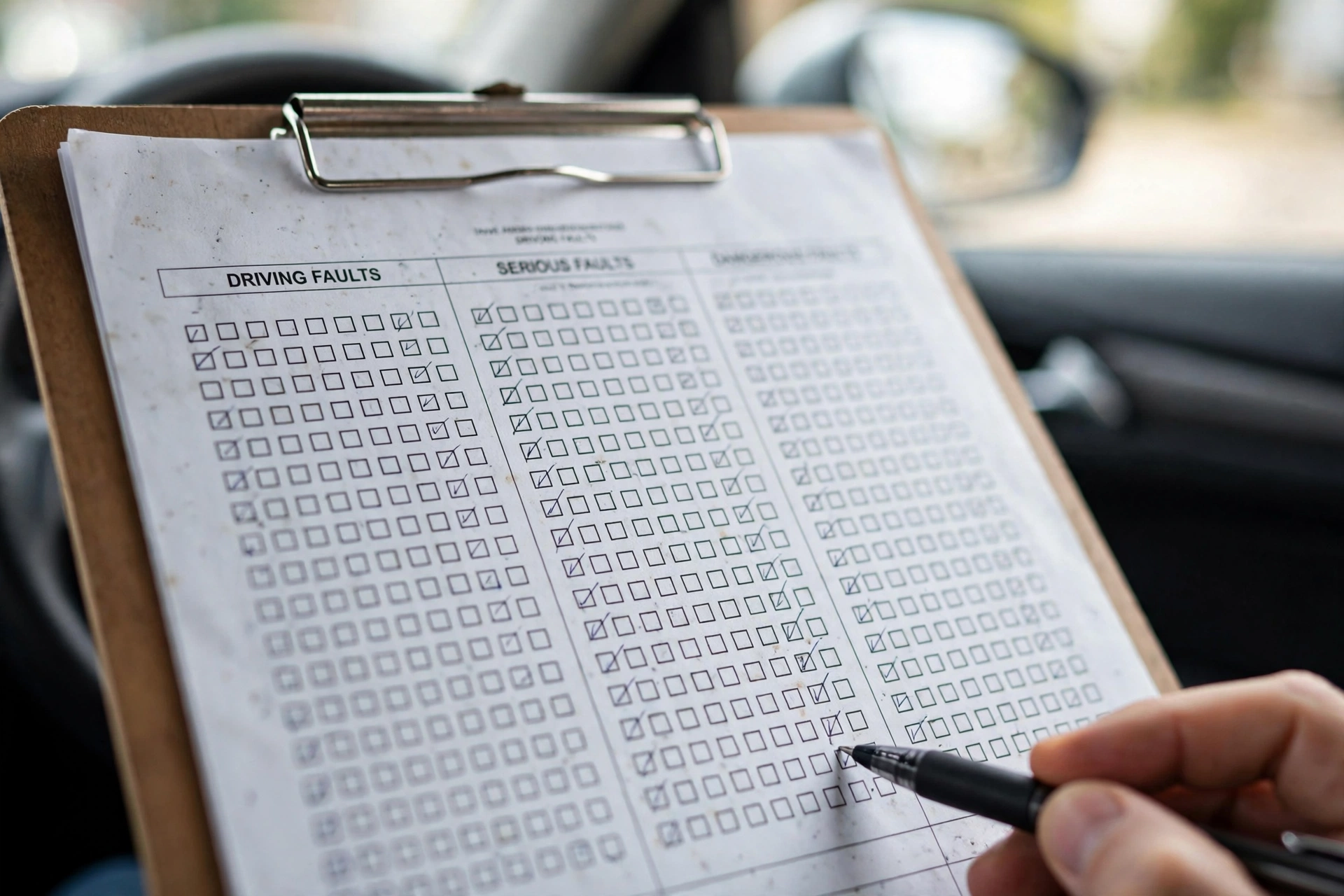
| Fault type | Also called | What it means | Effect on your result |
|---|---|---|---|
| Driving fault | Minor | Small, non-dangerous mistake | Up to 15 allowed |
| Serious fault | Major | Something potentially dangerous, or breaking the law | 1 = instant fail |
| Dangerous fault | Major | Actual danger to you, the examiner, the public, or property | 1 = instant fail |
A serious fault means the situation could have become dangerous — for example, pulling out when another car had to brake for you. A dangerous fault means real danger actually happened — for example, the examiner had to grab the wheel or use the dual brake. If the examiner has to step in, your result sheet will also show “ETA” (examiner took action).
Can Minors Turn Into a Serious Fault?
Yes — and this is the rule that catches out most learners. GOV.UK states it plainly: a driving fault is “not potentially dangerous, but if you keep making the same fault, it could become a serious fault.”
In practice, if you miss your mirror checks once, that is one minor. If you miss them at nearly every junction, the examiner can decide this is a habitual, unsafe pattern and mark a serious fault for it instead — which fails you on the spot.
There is even an official examiner guideline behind this, sometimes called the “16th fault rule”: for every fault, the examiner asks themselves, “If this were the 16th fault, could I justify failing the candidate for it?” It is how examiners decide whether a small mistake is worth recording as a driving fault at all. So repeated small errors are judged far more harshly than a single one-off slip.
The Most Common Minor Faults to Avoid
The DVSA’s Ready to Pass campaign publishes the top reasons people fail. The faults below come up again and again on failed tests — fix these in your lessons and your minor count will stay low:
- Observation at junctions — not looking properly before emerging
- Mirror checks — missing them before signalling, changing direction, or changing speed
- Positioning — drifting in your lane or taking the wrong lane at roundabouts
- Signals — signalling too late, too early, or not at all
- Response to signs and road markings — reacting late to speed limit or give-way signs
- Control of the car — harsh braking, poor clutch control, or wrong gears
Notice that “show me, tell me” questions sit in this list too: answering one of the two vehicle safety questions wrongly counts as a driving fault (a minor), so learn them before test day.
What Happens If You Fail Because of Minors?
Failing on minors alone is common — 16 small mistakes, or a cluster of repeated ones upgraded to a serious fault. If it happens:
- The examiner will explain every fault to you at the test centre, and you will get an email summary the same day.
- You must book another test and pay again. You have to choose a date at least 10 working days away.
- Talk to your instructor before rebooking and practise the exact fault categories on your report. When you rebook, the usual driving test booking rules still apply, so check waiting times early — in busy areas the next slot can be months away.
- Remember you can only take the practical test after passing your theory test — see our guide to the theory test pass mark if you need a refresher on that side.
One mistake does not define your driving. Use the report as a checklist, fix the patterns, and go again.
How to Keep Your Minors Low on Test Day
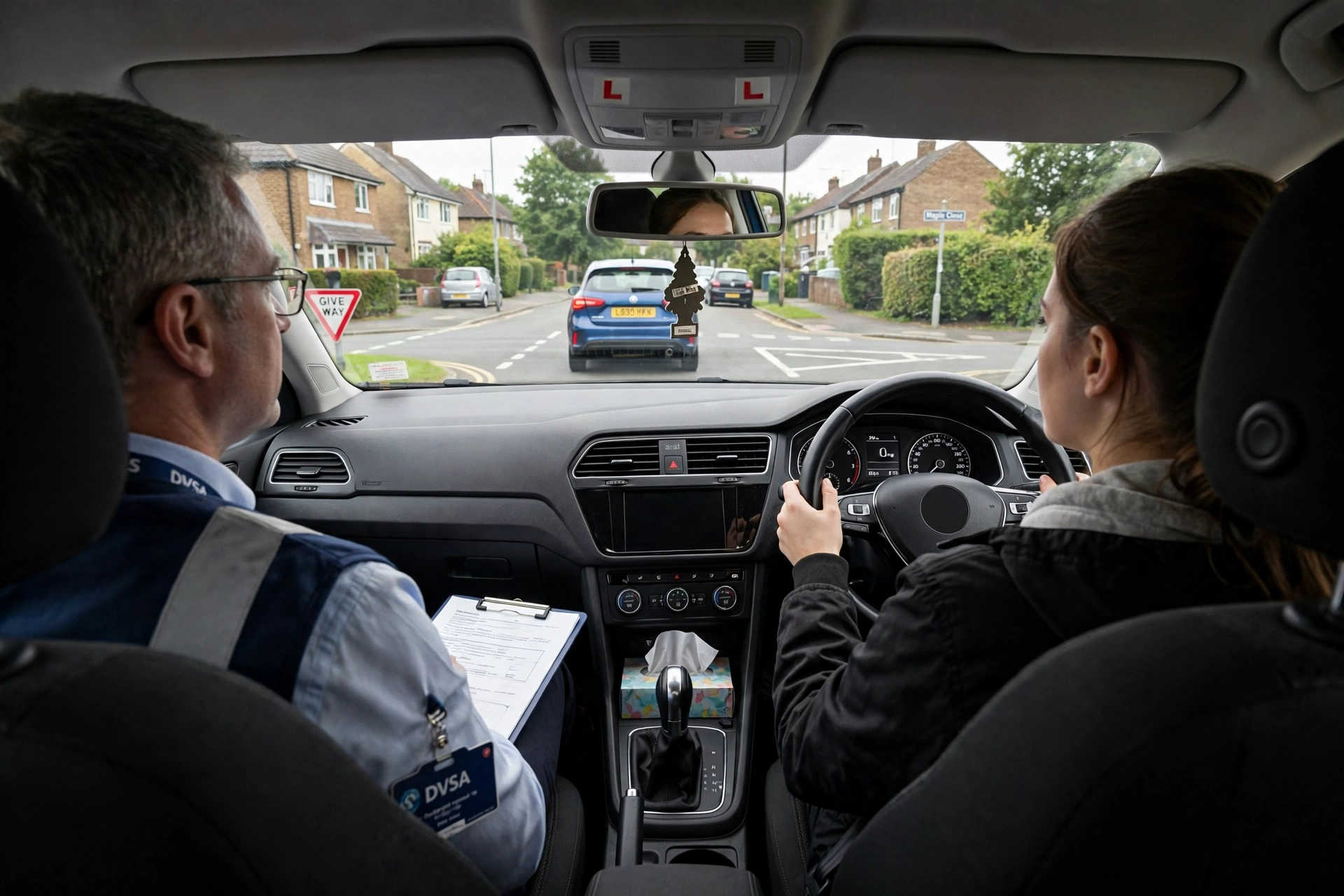
- Drive like you do in lessons. Test-day nerves make people rush or overthink. Stick to your normal routine.
- Narrate the MSM routine in your head — mirrors, signal, manoeuvre — at every junction and lane change.
- If you make a mistake, carry on. GOV.UK says it directly: a mistake might not affect your result if it is not serious. Panicking about one minor causes three more.
- Do not count your faults while driving. You cannot know your score, and trying to guess it distracts you from the road.
- Treat the first 5 minutes as warm-up. Settle into the car, get comfortable with the examiner’s directions, then drive normally.
Official source: GOV.UK driving test guidance.
Conclusion
You can have up to 15 minors (driving faults) on a UK driving test and still pass — but the 16th fails you, one serious or dangerous fault fails you instantly, and repeating the same minor can get it upgraded to a serious fault. The real target is not “15 or fewer” but safe, consistent driving: most passes involve only a handful of minors. Learn the common fault categories, fix the patterns your instructor flags, and do not let one small mistake rattle you on test day.
2 Comments