DVSA vs DVLA: What’s the Difference? (UK Guide 2026)
Type “DVLA” into Google when you meant the driving test, and you’ll wait weeks for an answer from the wrong agency. The DVSA vs DVLA difference UK drivers need to know is simple once you see it: DVLA handles licences (paperwork, records, tax) while DVSA handles standards (tests, MOT, enforcement). They’re two separate government agencies — and contacting the wrong one is one of the most common mix-ups in UK motoring. This guide spells out exactly what each one does, who to contact for what, and the mistakes to avoid. (Official sources: Driver and Vehicle Licensing Agency and Driver and Vehicle Standards Agency on GOV.UK.)
What Does the DVLA Do?
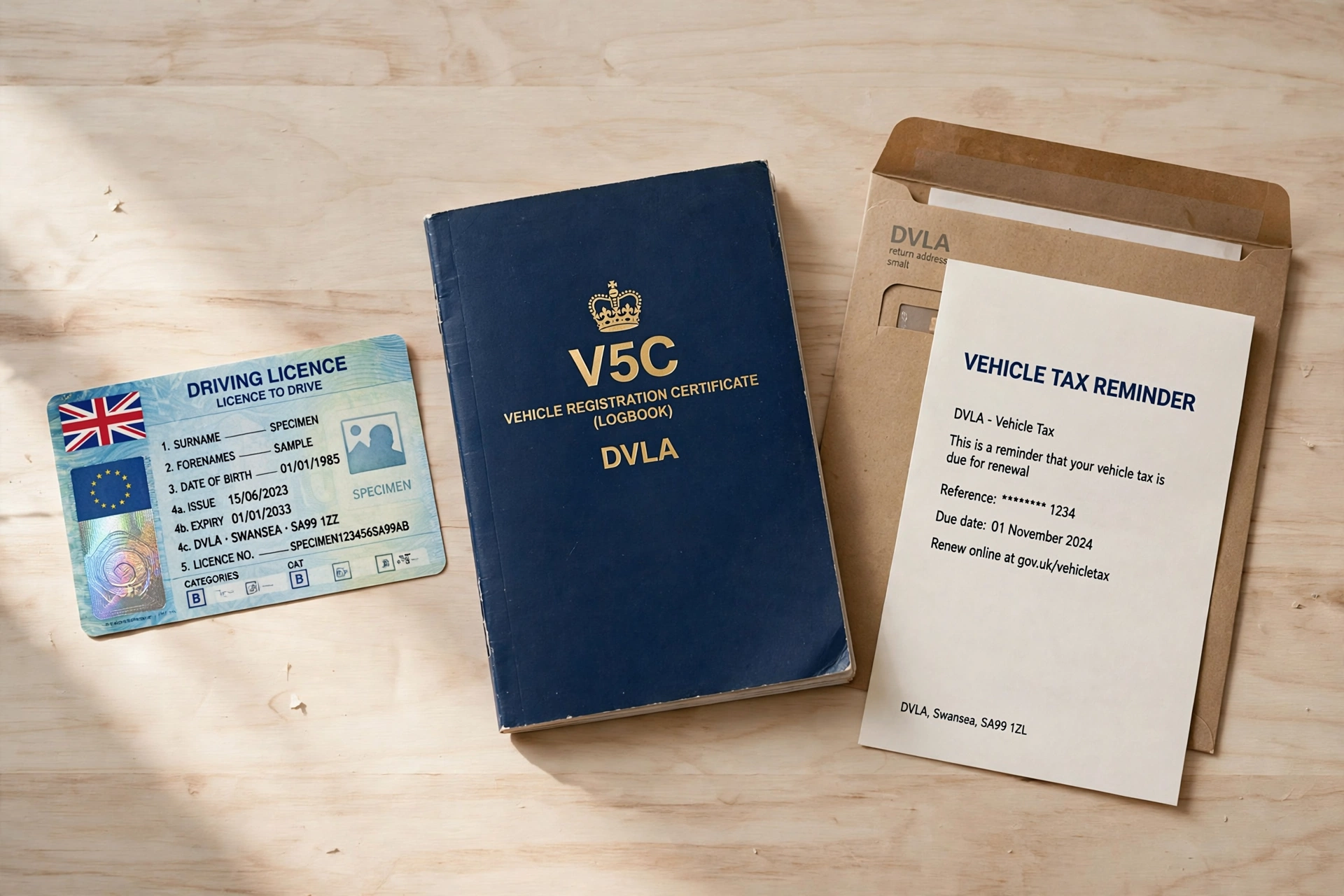
The DVLA — the Driver and Vehicle Licensing Agency — is the record-keeper. It’s an executive agency sponsored by the Department for Transport, maintaining records for more than 53 million drivers in Great Britain and 48 million vehicles across the UK, and collecting over £9 billion a year in Vehicle Excise Duty.
The DVLA is responsible for:
- Issuing driving licences — provisional, full, and replacements
- Vehicle registration — V5C log books and number plates
- Vehicle tax (VED) — collection, SORN declarations, and enforcement of unpaid tax
- Medical fitness to drive — records of notifiable medical conditions
- Endorsements — penalty points recorded on your licence
- The check-code service — the “view driving licence” system for sharing your record
If it involves a document, a record, or money owed on a vehicle — that’s DVLA territory. For the full picture of the agency itself, see our guide: DVLA Driving Licence.
What Does the DVSA Do?
The DVSA — the Driver and Vehicle Standards Agency — is the standards-enforcer. Also an executive agency sponsored by the Department for Transport, it was formed in 2014 from the merger of the Driving Standards Agency (DSA) and the Vehicle and Operator Services Agency (VOSA).
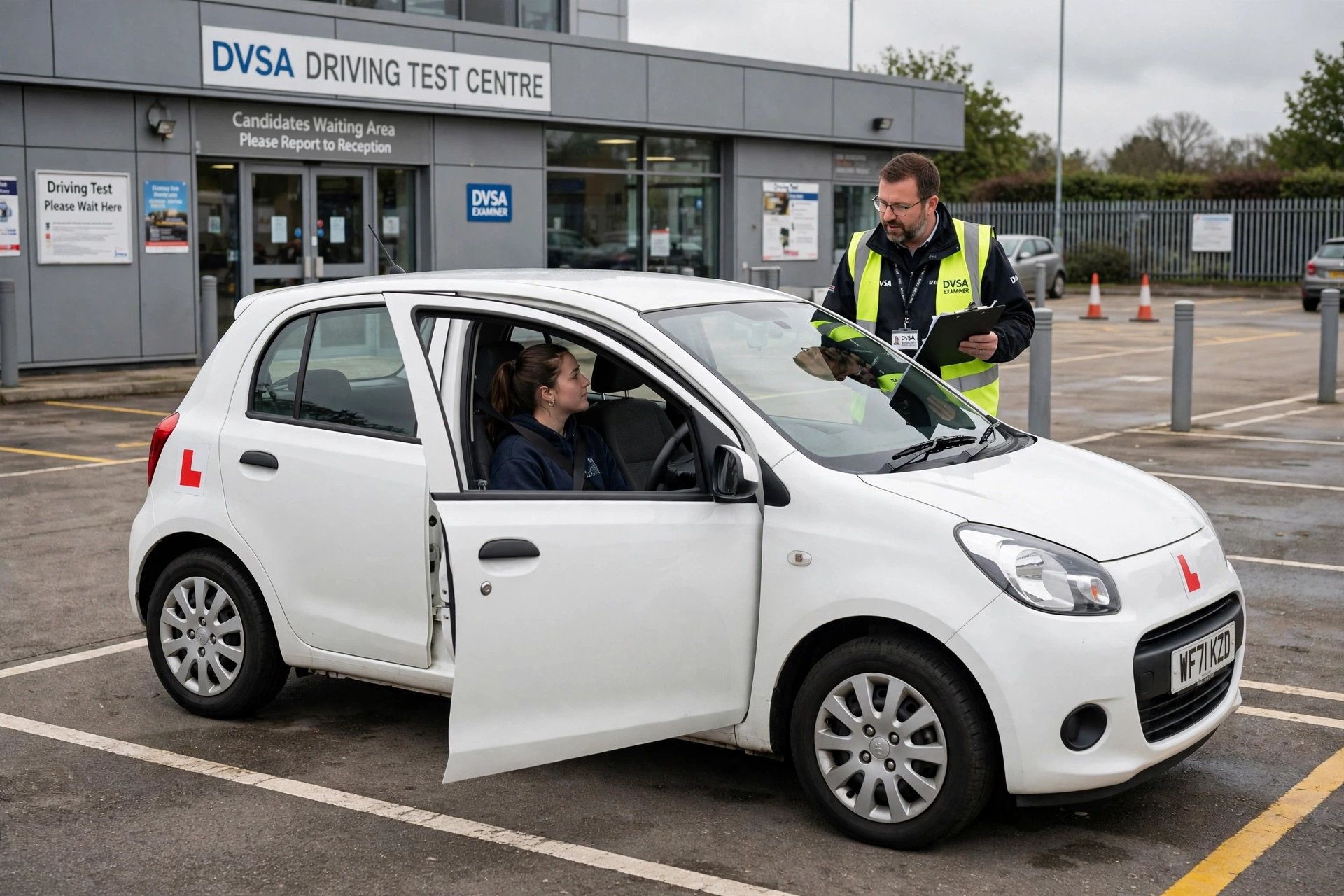
In GOV.UK’s own words, the DVSA exists to “carry out driving tests, approve people to be driving instructors and MOT testers, carry out tests to make sure lorries and buses are safe to drive, carry out roadside checks on drivers and vehicles, and monitor vehicle recalls.”
The DVSA is responsible for:
- Driving tests — theory and practical (theory tests are delivered by Pearson on DVSA’s behalf)
- Driving instructors — approving ADIs and carrying out standards checks
- MOT — approving MOT testers and enforcing the MOT scheme
- Lorry and bus safety — annual tests for heavy vehicles
- Roadside enforcement — checks on drivers and vehicles
- Vehicle recalls — monitoring manufacturer recalls
If it involves proving you’re fit to drive, or checking a vehicle is safe — that’s DVSA territory.
DVSA vs DVLA: Key Differences at a Glance
| — | DVLA | DVSA |
|---|---|---|
| Full name | Driver and Vehicle Licensing Agency | Driver and Vehicle Standards Agency |
| Core job | Records, licences, tax | Tests, standards, enforcement |
| Memory rule | Licences (paperwork) | Standards (proving it) |
| Driving tests | No | Yes — theory + practical |
| Issuing licences | Yes | No |
| Vehicle tax / SORN | Yes | No |
| MOT scheme | No | Yes |
| Penalty points records | Yes (endorsements) | No |
| Roadside checks | No | Yes |
| Medical conditions | Yes (notifications) | No |
| Formed | Long-standing agency | 2014 (DSA + VOSA merger) |
Who Should You Contact — DVSA or DVLA?
Use this decision table. Picking the wrong agency is the #1 reason for wasted weeks.
| Your situation | Contact |
|---|---|
| Apply for, renew, or replace a licence | DVLA |
| Tell them about a medical condition | DVLA |
| Tax your vehicle or declare SORN | DVLA |
| Update V5C log book / number plates | DVLA |
| Get a licence check code | DVLA — see Driving Licence Check Code |
| Book or change a driving test | DVSA — see Driving Test Booking Rules |
| Complain about a driving test | DVSA |
| MOT queries or tester issues | DVSA |
| Report an unsafe lorry or bus | DVSA |
| Penalty points on your licence | DVLA records them — see Penalty Points on a Driving Licence |
Common DVSA/DVLA Mix-Ups
These are the confusions that cost people time — get them straight:
- “I need a check code” → DVLA. The licence check-code service is DVLA’s system, not DVSA’s. Don’t ring the test people for it.
- “I want to book my test” → DVSA. Test booking, rescheduling, and cancellations all run through DVSA — DVLA can’t help.
- “I have a medical condition” → DVLA. Notifiable conditions go to DVLA, which decides what happens to your licence.
- “My MOT garage overcharged me” → DVSA. The DVSA approves MOT testers and polices the scheme.
- “I want to complain about my examiner” → DVSA. Test conduct complaints go to DVSA, not DVLA.
- “I failed — what now?” → DVSA runs the tests. For what happens after a fail and how rebooking works, see What Happens If You Fail Your Driving Test.
One nuance most blogs miss: your theory test is a DVSA test even though you sit it at a Pearson centre — Pearson simply delivers it on DVSA’s behalf.
Conclusion
The DVSA vs DVLA difference comes down to one line: DVLA = licences, DVSA = standards. DVLA keeps the records — your licence, your vehicle, your tax, your medical status, your points. DVSA sets and enforces the standards — your driving test, your instructor’s qualification, your MOT, roadside safety. They’re both Department for Transport agencies, they both matter, but they do completely different jobs. Bookmark the decision table above and you’ll never contact the wrong one again.