Penalty Points on a UK Driving Licence: Rules and How Long They Last
Last reviewed: September 2026. Rules are taken from GOV.UK.
Penalty points on a driving licence do not simply vanish after a set date. They stay on your record for either 4 or 11 years, but only count toward disqualification for part of that time, and the difference catches a lot of drivers out.
This guide covers how long points last, what “totting up” actually means, the stricter rules for new drivers, and how a speed awareness course fits in. Every figure is matched against GOV.UK as of September 2026.
How Long Do Penalty Points Stay on a Driving Licence?
Penalty points on a driving licence stay on your record for 4 or 11 years, depending on the offence.
| Endorsement length | Points are “active” (count toward totting up) | Applies to |
|---|---|---|
| 4 years | First 3 years | Most offences, including speeding, using a mobile phone, careless driving |
| 11 years | First 10 years | Drink driving, drug driving |
The endorsement stays visible on your record for the full 4 or 11 years, even though the points stop counting toward disqualification a year earlier. This last year exists so insurers and authorities can still see the endorsement if they check your driving record.
Why do points stop “counting” before the endorsement disappears?
Only points within their active period count for totting up. Once a 4-year endorsement passes the 3-year mark, the points can no longer contribute to a totting-up disqualification, but the endorsement itself, and the points total, are still visible on your licence record for one more year.
Do points count from the date of the offence or the date of conviction?
For most offences, the 4-year period runs from the date of the offence. For offences that result in disqualification, or for dangerous driving, it runs from the date of conviction instead. This distinction matters if there is a gap between when something happened and when a court dealt with it.
How Many Points Can You Get on a UK Driving Licence?
Points range from 2 to 11 per offence, set out in the Road Traffic Offenders Act 1988. A few examples:
| Offence | Points |
|---|---|
| Using a mobile phone while driving | 6 |
| Speeding | 3 to 6 |
| Driving without insurance | 6 to 8 |
| Careless driving | 3 to 9 |
| Dangerous driving | 3 to 11 |
| Drink or drug driving | 3 to 11 |
If a court convicts you of two or more offences from the same incident, it does not usually add every set of points together. Instead, the highest single offence’s points are normally the ones endorsed on your licence, though the court retains discretion here.
What Is “Totting Up”?
Totting up is the rule that disqualifies you once your active points reach a threshold within a rolling window.
How many points before you lose your licence?
12 or more points within 3 years makes you liable to disqualification under totting up, shown on your record as code TT99. This is calculated from offence to offence, so a new offence is compared against whatever active points you already had at that moment, not your total today.
How long is a totting-up ban?
- 6 months, for a first totting-up disqualification within 3 years
- 12 months, if you have been disqualified once before in that period
- 2 years, if you have been disqualified twice before in that period
A totting-up disqualification wipes the slate clean. Once you reapply for your licence afterward, the points that led to the ban are removed from your new record.
Can a court avoid disqualifying you at 12 points?
Yes, in limited circumstances. If losing your licence would cause exceptional hardship, a court can choose not to disqualify you, though this is decided case by case and is not guaranteed.
What Are the Penalty Point Rules for New Drivers?
New drivers face a stricter limit than the standard totting-up threshold.
How many points can a new driver get?
If you build up 6 or more points within 2 years of passing your first practical test, your licence is automatically revoked, not just suspended. This applies under the New Drivers Act 1995.
What happens if a new driver hits 6 points?
You go back to provisional licence status and must pass both the theory and practical tests again before you can drive unsupervised. Any points you picked up while still on your provisional licence, before passing, carry over and count toward this 6-point limit once you pass.
Can You Get Points Removed From Your Licence Early?
No. There is no legal way to pay, appeal, or take a course to remove points that have already been endorsed on your licence. They stay until they expire naturally, at the 3 or 10-year “active” mark, or fall off the record entirely a year later.
The one way to avoid points before they are added is a speed awareness course, offered before a conviction is recorded, not after.
How Does a Speed Awareness Course Avoid Points?
If you are caught speeding by a low margin, some police forces offer a National Speed Awareness Course (NSAC) instead of a fixed penalty and points.
Who is eligible for a speed awareness course?
Eligibility varies by police force, but common conditions include:
- being caught within an “acceptable range” over the limit, typically around 10% of the limit plus 2 mph, up to roughly 10% plus 9 mph
- not having attended a similar course in the last 3 years
- no other offences at the time you were caught
You cannot request a course yourself. The police decide eligibility and contact you by letter, usually within about 14 days of the offence.
What does the course cost, and does it avoid points?
Courses typically cost £80 to £100, roughly similar to the fine you would otherwise pay. In exchange, you avoid the 3 penalty points entirely, and can accurately tell insurers you were not convicted of the offence.
How to Check Your Penalty Points
Use GOV.UK’s “View your driving licence information” service to see your current points and their expiry dates. You need your licence number, National Insurance number and postcode.
Points are attached to your driving record at DVLA, not to the physical card. Replacing, renewing or switching your licence does not remove or reset them.
Does a Disqualification Always Come With Points?
Not necessarily. Some offences are “non-endorsable”, meaning a court can disqualify you without adding any points at all. If you are disqualified for 56 days or more, with or without points, you must apply for, and pay for, a new licence once the ban ends. You cannot simply resume driving on your old one.
Conclusion
Penalty points on a driving licence run on two clocks at once: a shorter “active” period that counts toward totting up, and a longer visibility period that insurers can still see. Track your own points through GOV.UK rather than guessing, since a court will always calculate totting up from the date of each offence, not from memory.
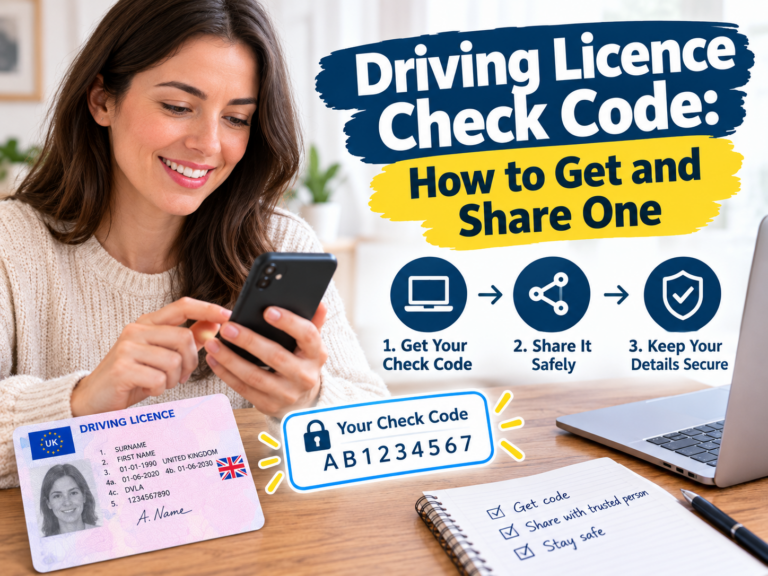
Next, if you are close to a disqualification, check how to replace your licence once a ban ends, or how a check code shares your record with an employer or insurer.