DVLA Driving Licence: Services, Contact Details and Fees
Last reviewed: September 2026. Details are taken from GOV.UK.
Search “DVLA driving licence” and you may land on a copycat site before the real one. Every UK driving licence in England, Scotland and Wales is issued by one organisation, the DVLA, and going anywhere else usually means paying extra for something that is free or cheaper direct.
Here is what DVLA actually does, how to reach them for each type of query, current fees, and how to spot a fake. Details reflect GOV.UK as published in September 2026.
What Is the DVLA?
The Driver and Vehicle Licensing Agency (DVLA) is the UK government body that issues driving licences and manages vehicle registration for England, Scotland and Wales. It is an executive agency sponsored by the Department for Transport, based in Swansea.
DVLA maintains close to 53 million driver records and more than 47 million vehicle records, and collected £8.4 billion in Vehicle Excise Duty in the 2024 to 2025 tax year.
Where is DVLA based, and can you visit in person?
DVLA was formed in 1965 and used to run 39 local offices across Great Britain, where you could walk in and deal with a licence in person. All of these closed by December 2013, and DVLA’s work is now fully centralised in Swansea. There is no walk-in public counter, so every service now runs through GOV.UK, the phone line, or the post, rather than an in-person visit. This shift to remote-only service is also why GOV.UK’s online tools, rather than a branch visit, are the fastest route for almost every query.
Does DVLA cover Northern Ireland?
No. Northern Ireland has its own licensing authority, the DVA (Driver & Vehicle Agency), with a separate website (nidirect) and its own fees. If your licence was issued in Northern Ireland, DVLA cannot help with it directly.
What Does DVLA Do for Driving Licences?
DVLA handles every stage of a driving licence, including:
- issuing first provisional licences
- processing theory and practical test results into a full licence
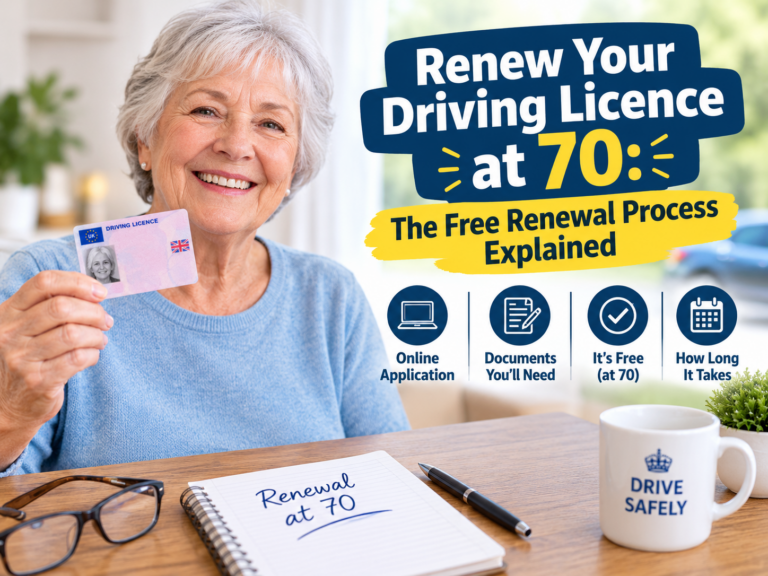
- renewing photocards every 10 years, and every 3 years from age 70
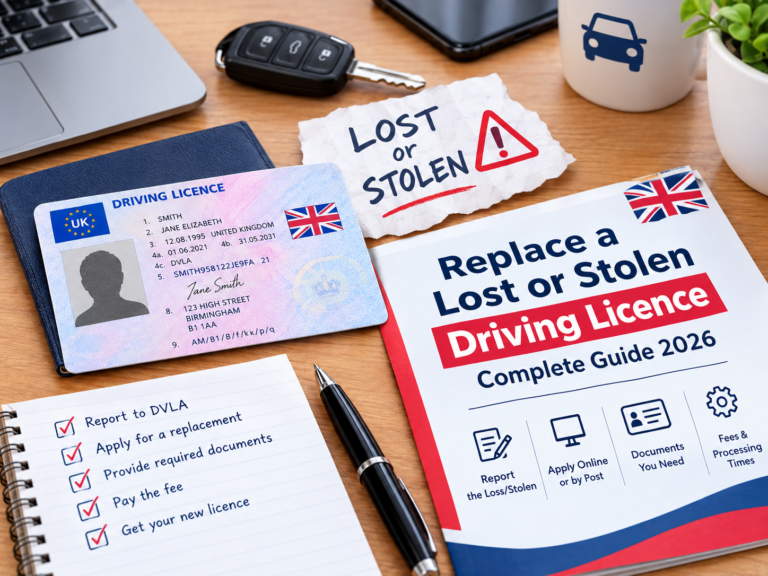
- replacing lost, stolen or damaged licences
- updating your name, address or photo
- recording medical conditions that affect your ability to drive
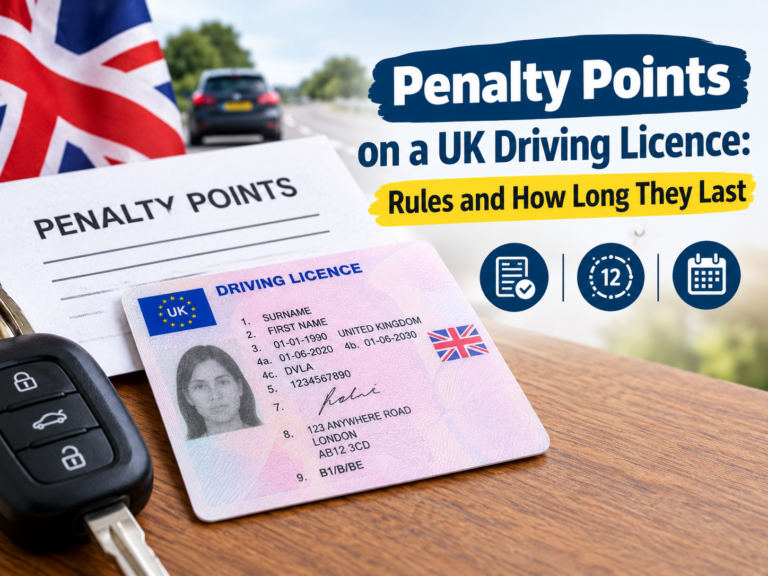
- recording penalty points and disqualifications
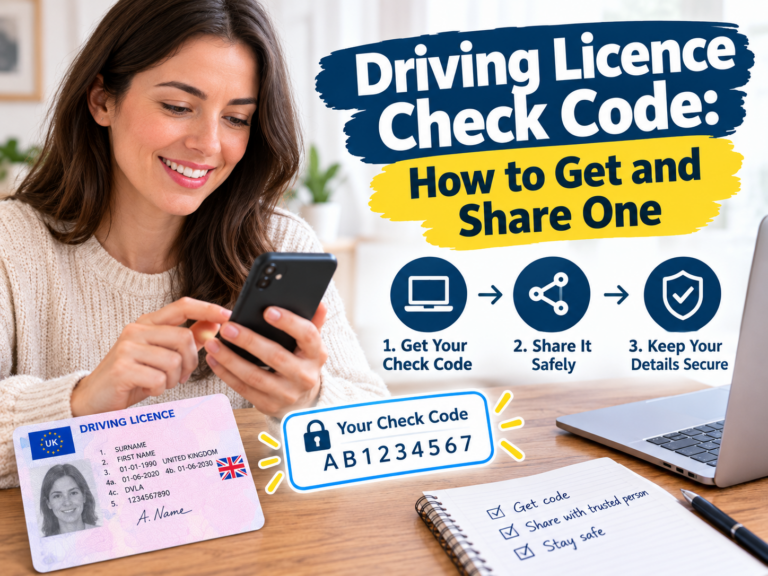
- generating licence check codes for employers and hire companies
DVLA also handles vehicle tax, number plates and log books (V5C documents), but these are separate services from your driving licence itself.
Is DVLA the same as DVSA?
No, and this is one of the most common mix-ups. DVLA issues your licence, keeps your driving record, and deals with medical conditions and penalty points. DVSA (Driver and Vehicle Standards Agency) is a separate organisation that runs your theory and practical driving tests, and sets standards for driving instructors. If your query is about booking, changing or complaining about a test, that goes to DVSA, not DVLA, even though both sit under the Department for Transport.
What Else Does DVLA Do, Beyond Driving Licences?
DVLA’s full remit covers the vehicle side as well as the driver side:
- Vehicle tax (VED): collecting road tax, and running the Statutory Off Road Notification (SORN) scheme for vehicles kept off public roads.
- Vehicle registration: issuing and updating the V5C log book, and registering new or imported vehicles.
- Personalised registrations: selling and transferring number plates through DVLA’s own auction and retail service.
- Driver medical records: assessing whether a medical condition affects someone’s fitness to drive, and making licensing decisions based on that.
DVLA is genuinely large: it maintains close to 53 million driver records and more than 47 million vehicle records, and collected £8.4 billion in Vehicle Excise Duty in the 2024 to 2025 tax year. Driving licences are only one part of a much bigger operation.
Can You Drive While DVLA Processes Your Application?
In many cases, yes. Under section 88 of the Road Traffic Act 1988, you can usually continue driving while DVLA processes a renewal, provided:
- you held a valid licence for that vehicle type immediately before applying
- you meet the medical standards for driving
- you are not disqualified from driving
- your application has not been refused
This mainly applies to renewals, such as your 10-year photocard or a medical renewal, rather than a first application, since a first-time learner has no prior entitlement to rely on. If you are unsure whether your specific situation is covered, check the guidance on GOV.UK before you assume you can keep driving.
How to Complain About DVLA
If a DVLA service goes wrong, there is a two-step process:
- Contact DVLA directly about your issue first. DVLA aims to send a full reply within 10 working days.
- Write to the Head of Complaints if you are not satisfied with the first response, at Head of Complaints, DVLA, Swansea, SA6 7JL. This also aims for a 10 working day response.
If you are still not satisfied after both steps, you can ask DVLA to refer your complaint to an Independent Complaints Assessor (ICA), who reviews the case independently of DVLA itself.
How Long Does DVLA Actually Take?
Processing times vary by service and how complete your application is. DVLA’s own published figures for medical licensing decisions in the 2024 to 2025 year show:
- 7.53 days, on average, when DVLA already has all the information it needs
- 44.2 days, on average, when DVLA has to request further information from you, your GP, or another third party
This gap is the single biggest driver of “why is my application taking so long” complaints. Sending complete, accurate information the first time, rather than leaving gaps DVLA has to chase up, is the most reliable way to avoid a long wait.
DVLA Checks for Employers
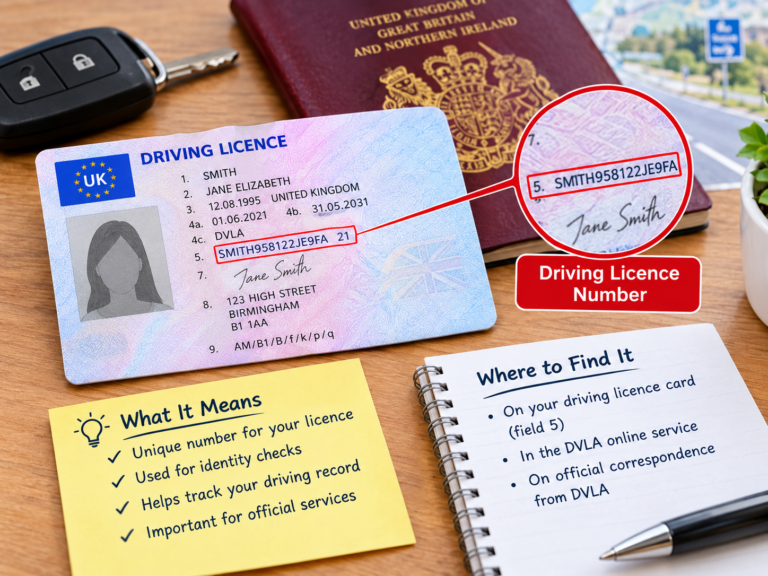
Businesses that employ drivers, such as delivery, haulage or fleet operators, use DVLA’s systems to confirm staff are legally entitled to drive. This usually works through the same licence check code system used for hire companies: the employee generates a code through GOV.UK, and the employer enters it alongside the last 8 characters of the employee’s driving licence number to see entitlements, penalty points and disqualifications.
DVLA does not offer employers a way to check a licence using only a name or date of birth, precisely to stop licences being checked without the driver’s knowledge or consent. This keeps the check code system as the only sanctioned route for a third party to view someone else’s driving record.
DVLA Driving Licence Fees
| Service | Online | Post |
|---|---|---|
| First provisional licence | £34 | £43 |
| Renew a 10-year photocard | £14 | £17 |
| Replace lost, stolen or damaged licence | £20 | £20 |
| Change of address | Free | Free |
| Change of name | Not available | Free |
| Change of photo | £14 | £17 |
| Renew at 70 or over | Free | Free |
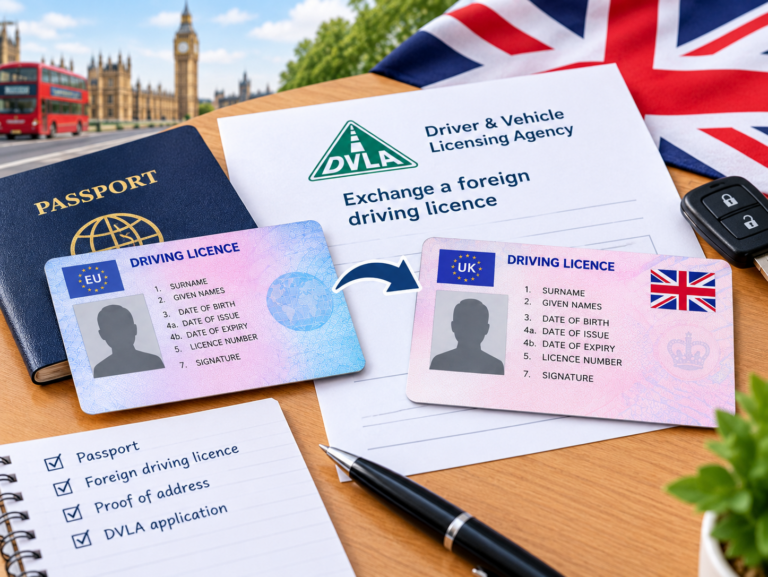
| Exchange a foreign licence | Not available | £43 |
These are DVLA’s own charges. Always apply through GOV.UK directly, since third-party “copycat” websites can charge extra service fees for exactly the same process.
How to Contact DVLA
What is the DVLA phone number?
0300 790 6801 is DVLA’s main number for driving licence enquiries. Lines are open Monday to Friday, 8am to 7pm, and Saturday 8am to 2pm. Calls are charged at a standard rate.
If you are calling from outside the UK, use +44 1792 267000 instead, since international rates apply.
What is DVLA’s postal address?
- General correspondence: DVLA, Swansea, SA99 1BA
- New driving licence applications: DVLA, Swansea, SA99 1BN
- Subject access requests: DVLA, Swansea, SA99 1BX
Use the specific address for your query where one is given, since general correspondence can take longer to reach the right team.
Can you contact DVLA online?
Yes. GOV.UK’s “Contact DVLA” service helps you find the right phone number, email or postal address for your specific query, whether that is driving licences, vehicle tax, or a medical condition affecting your driving.
For account-related help, such as issues signing in to check or manage your driving record, DVLA also offers webchat, available Monday to Friday, 8am to 7pm.
Does DVLA have an email address?
Yes, for general enquiries: enquiries@dvla.gov.uk. Response times can be longer than phone or online services, given the volume of correspondence DVLA handles across driving licences, vehicle tax and registration queries, so use it only for non-urgent matters.
Managing Your Licence Through a DVLA Online Account
GOV.UK’s driver and vehicles account lets you view your driving record, check penalty points and entitlements, and set reminders for things like vehicle tax, all in one place, without needing to call or write in. You sign in with the same GOV.UK credentials you would use to apply for or renew a licence.
If you have trouble signing in or using the account itself, DVLA offers a dedicated webchat service for account issues, separate from the general driving licence enquiry line, available Monday to Friday, 8am to 7pm.
This account is different from the “View or share your driving licence information” service used for one-off check codes. The account is for ongoing self-management of your record, while a check code is a single, time-limited share with a third party such as an employer or hire company.
DVLA vs DVA: Which One Handles Your Licence?
| DVLA | DVA | |
|---|---|---|
| Covers | England, Scotland, Wales | Northern Ireland |
| Website | gov.uk | nidirect.gov.uk |
| Local offices | None since 2013, fully remote | Some services still handled locally |
| Licence format | 16-character driver number | 8-digit driver number |
| Paper counterpart | Abolished June 2015 | Still in use |
If you are unsure which one issued your licence, check the issuing authority shown in field 4c on the front of your photocard, since this tells you at a glance whether DVLA or DVA is responsible for your record.
How to Avoid DVLA Copycat Websites and Scams
DVLA has repeatedly warned about third-party sites that mimic official government pages and charge extra “processing” or “service” fees for things that cost nothing more than the standard DVLA fee direct. Beyond copycat websites, DVLA has also flagged specific scam patterns worth knowing about:
- Fake tax refund texts and emails, claiming you have overpaid vehicle tax and are due money back, which lead to a fraudulent site asking for bank details.
- Fake payment failure messages, claiming your last vehicle tax payment failed and asking you to “update” your card details through a link.
- Fake licence problem messages, claiming there is an issue with your driving licence information, designed to harvest personal details for identity fraud.
- Social media adverts offering “genuine” driving licences, sometimes claiming to issue one within days, which are not connected to DVLA in any way.
DVLA has been explicit that it never asks for bank or card details by text message or email, and never sends links asking you to “confirm” personal or payment information that way.
To stay safe:
- Check the web address. Every genuine DVLA service runs on a www.gov.uk page. If the address ends in anything else, including something that only looks similar, it is not official.
- Ignore paid search ads for licence services. Some copycat sites pay to appear at the top of search results, above the real GOV.UK listing.
- Compare the fee to the official table above. If a site asks for significantly more than DVLA’s own charge, it is adding a markup.
- Never share a photo of your licence or vehicle documents online, including on social media or in messages to people you do not know, since this can be used for identity fraud.
How do you report a DVLA scam?
Forward a suspicious email to report@phishing.gov.uk. Forward a suspicious text message to 7726, a free reporting number run by phone networks. Do this instead of replying to the message or clicking any link in it.
Common DVLA Driving Licence Queries
- Checking an application’s progress: use GOV.UK’s “Track your driving licence application” service rather than calling, since it gives a live status without waiting on hold.
- Checking penalty points or entitlements: use “View or share your driving licence information” on GOV.UK, rather than contacting DVLA directly for routine checks.
- Reporting a medical condition: most conditions can be reported through GOV.UK’s online service, without needing to write in or call.
- General driving licence questions: GOV.UK’s driving licence pages cover most queries without needing to contact DVLA at all, and are usually faster than phoning.
Conclusion
DVLA is the single body behind every driving licence service in England, Scotland and Wales, and every one of its fees is published on GOV.UK. It is a separate organisation from DVSA, which runs your actual driving tests, and from the DVA, which covers Northern Ireland. Apply, renew or replace your licence directly through gov.uk, send complete information the first time to avoid the longest processing delays, and treat any site charging noticeably more, or appearing only in paid search ads, with caution.
Next, check the full guide to applying for your provisional licence, or how to replace a lost or stolen one.