DVLA Medical Conditions You Must Tell DVLA About
DVLA medical conditions are health problems that can affect your ability to drive safely — and telling DVLA about them is a legal duty, not a choice. If you develop a condition on the DVLA list and keep quiet, you can be fined up to £1,000 and prosecuted if you crash. This guide explains which conditions you must report, how to check yours in minutes, how to tell DVLA, and what happens after you do.
The rules apply from the day you apply for your provisional driving licence, where you first answer medical questions, and they stay with you for your whole driving life. Everything below follows the official guidance on GOV.UK.
Common DVLA Medical Conditions at a Glance
| Condition group | Examples | What to do |
|---|---|---|
| Brain and nerve conditions | Epilepsy and seizures, stroke or TIA, dementia, Parkinson’s disease, multiple sclerosis | Check the official A to Z guidance and tell DVLA if the condition is listed |
| Diabetes | Insulin-treated diabetes or serious low-blood-sugar episodes | Check the exact diabetes rules for your licence group |
| Heart conditions | Heart attack, angina, arrhythmia, pacemaker or defibrillator | Tell DVLA if the condition is on the official list |
| Eyesight problems | Glaucoma, double vision or loss of vision in one eye | Check the vision rules and report listed problems |
| Sleep conditions | Obstructive sleep apnoea and narcolepsy | Report listed conditions, especially where excessive sleepiness affects driving |
| Mental health and substance problems | Bipolar disorder, schizophrenia, psychosis, alcohol or drug misuse | Check the A to Z guidance; a licence may be refused or revoked until recovery is proven |
What Are DVLA Medical Conditions?
A DVLA medical condition is any illness, disability or health problem that could affect how safely you drive. DVLA keeps an official A to Z list of more than 200 conditions, and if yours is on it, you must tell them. It does not matter whether you feel fine — the duty is about the condition, not how you feel on a good day.
You must also tell DVLA if a condition gets worse after you got your licence, or if you develop a new one at any age. The list covers physical conditions, mental health conditions, eye problems, and problems with alcohol or drugs.
DVLA Medical Conditions List: The Most Common Conditions to Report
These are the conditions drivers ask about most. If you have any of them, check the A to Z guidance for the exact rules:
- Brain and nerve conditions: epilepsy and seizures, stroke and mini-stroke (TIA), dementia, Parkinson’s disease, multiple sclerosis, brain tumours and head injuries.
- Diabetes: especially if you treat it with insulin, or if you have had serious low blood sugar episodes (hypoglycaemia).
- Heart conditions: heart attack, angina, arrhythmia, heart failure, and having a pacemaker or defibrillator fitted.
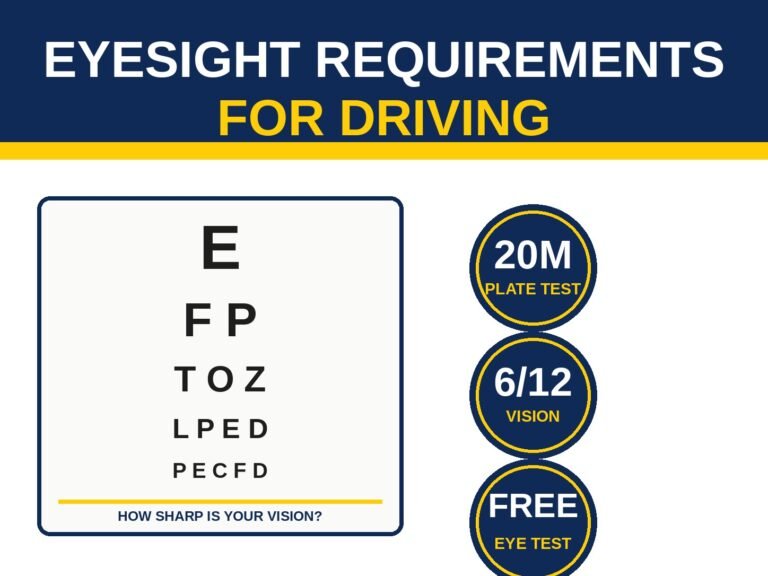
- Eyesight problems: conditions like glaucoma, double vision and loss of vision in one eye. Our guide to the eyesight requirements for driving explains the vision standards in full.
- Sleep conditions: obstructive sleep apnoea and narcolepsy, because excessive sleepiness makes driving dangerous.
- Mental health conditions: bipolar disorder, schizophrenia, severe depression and psychosis, where the condition or its medication can affect driving.
- Blackouts and fainting: unexplained loss of consciousness or syncope always needs reporting and investigation.
- Alcohol and drug problems: dependency or misuse must be reported, and licences are usually refused or revoked until recovery is proven.
How to Check If Your Condition Is on the List
Checking takes a few minutes and costs nothing:
- Car and motorcycle licences: use the GOV.UK online service to search for your condition and report it. You will need your driving licence details, and you may need your GP or consultant’s name and address. You get one hour to finish once you start, and you cannot save and come back later.
- Bus, lorry and coach licences: you cannot use the online service. Check the A to Z list for your condition and follow the link to the right form.
- Not sure? If your condition is not listed and you cannot use the online checker, contact DVLA and ask. Checking is always safer than guessing.
Northern Ireland has a different reporting route through the DVA, so this guide’s steps are for licences in England, Scotland and Wales.
How to Tell DVLA, Step by Step
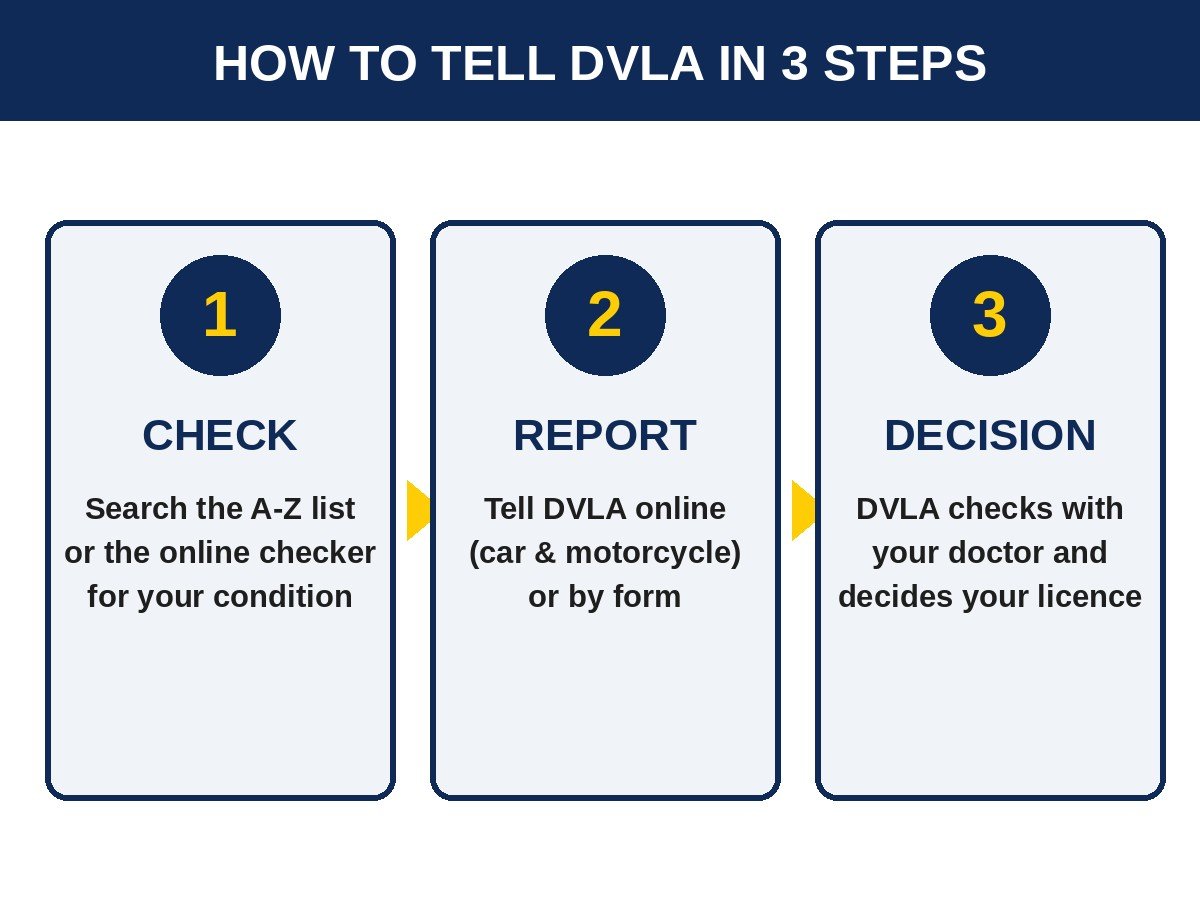
There are two ways to inform DVLA of a medical condition: online, or by posting the form for your condition. For a car or motorcycle licence, the online route is quickest:
- Step 1 — Check: search the A to Z list or the online checker to confirm your condition needs reporting and to see if you must stop driving straight away.
- Step 2 — Report: complete the online service in one sitting (about an hour is allowed), with your licence number and your doctor’s details ready.
- Step 3 — Wait for the decision: DVLA reviews your case, usually contacting your GP or consultant for medical evidence. Keep any letters they send you.
If you cannot report online, each condition on the A to Z list links to the paper form for that condition, which you post to DVLA instead.
What Happens After You Report
Reporting a condition does not automatically mean losing your licence. Most drivers who report a condition keep driving. DVLA looks at the medical evidence and can decide to:
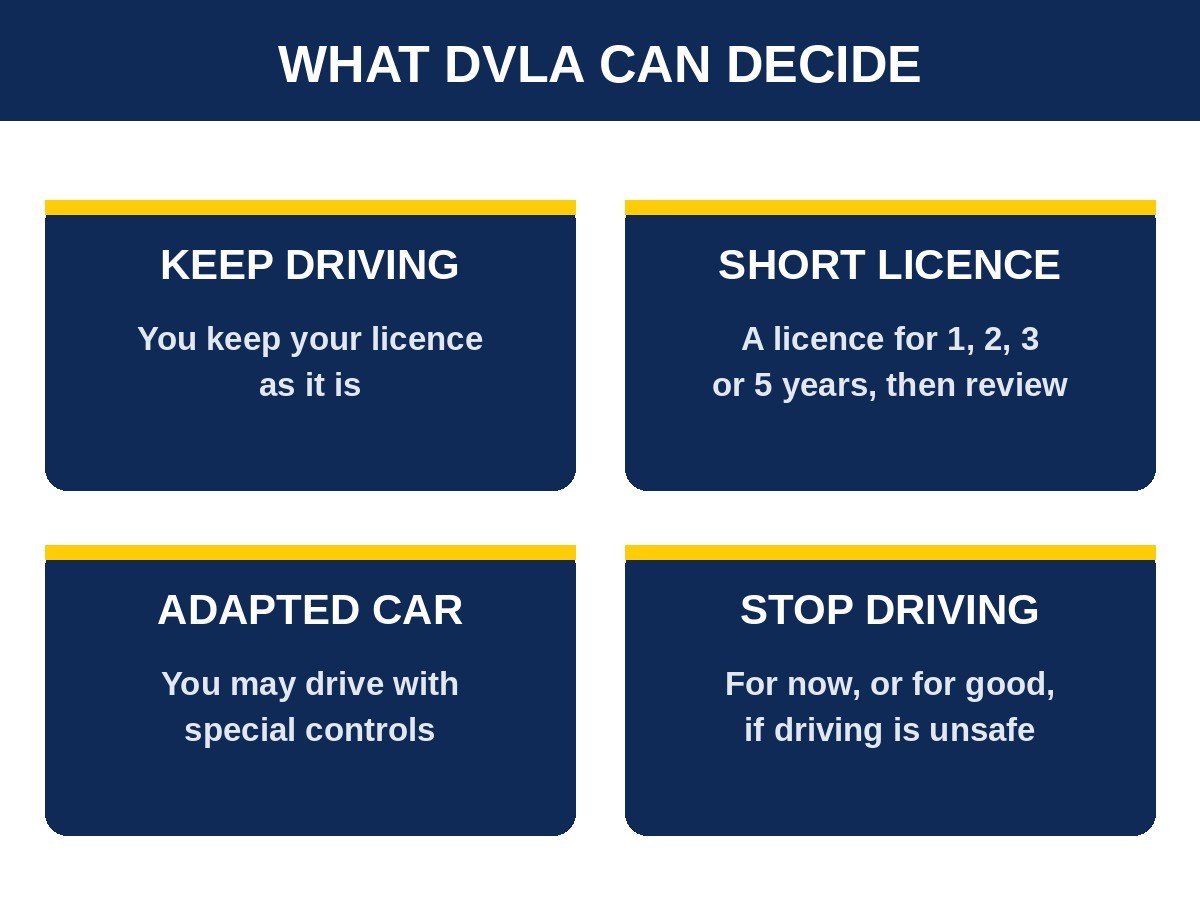
- Let you keep your licence exactly as it is, because the condition does not affect your driving enough to restrict it.
- Give you a short licence for 1, 2, 3 or 5 years, so your condition is reviewed regularly.
- Allow an adapted car, for example special controls, if a physical condition limits how you drive.
- Ask for more checks first, such as a medical examination, an eyesight test, or a driving assessment.
- Tell you to stop driving, either for a set period while you recover, or for good if driving would be unsafe.
Can You Keep Driving While DVLA Decides?
In many cases, yes — as long as your doctor has not told you to stop, and the guidance for your condition does not say you must stop straight away. For some serious conditions, such as a first epileptic seizure or a stroke, the A to Z guidance tells you to stop driving immediately and tell DVLA.
The safest rule is simple: read the guidance for your exact condition, follow your doctor’s advice, and never guess. If your doctor says stop, stop — driving anyway risks your licence, your insurance and other people’s safety.
The £1,000 Fine and Other Risks of Not Telling DVLA
You can be fined up to £1,000 if you do not tell DVLA about a medical condition that affects your driving. That is the smallest of the risks:
- If you crash while driving with an unreported condition, you can be prosecuted.
- Your insurance may be invalid, leaving you to pay for the damage yourself.
- If DVLA finds out another way — for example from the police or a medical professional — they can take your licence away.
Telling DVLA, on the other hand, is free, and most people keep their licence. There is no good reason to hide a condition.
Giving Up Your Licence Voluntarily
You can give up (surrender) your licence voluntarily, and for some drivers this is the right choice. GOV.UK suggests considering it if:
- Your doctor tells you to stop driving for 3 months or more.
- Your condition affects your ability to drive safely and lasts for 3 months or more.
- You no longer meet the required standards for driving because of your condition.
If you surrender your licence, you send it to DVLA and tell them why. If your health improves later, you can apply again — getting a licence back after voluntary surrender is usually simpler than after a licence was taken away. Drivers approaching renewal age should also read our guide to renewing a driving licence at 70, where medical declarations are part of every renewal.
Lorry and Bus Drivers: Stricter Rules
Bus, lorry and coach (Group 2) drivers face higher medical standards than car drivers, because of the size of the vehicles and the time spent on the road. Group 2 drivers cannot use the online reporting service — you check the A to Z list and use the form for your condition. Many conditions that a car driver can keep driving with will stop a Group 2 licence, at least for a period, so check your own condition’s guidance carefully.
Conclusion
DVLA medical conditions are not something to fear or to hide. Check the A to Z list, tell DVLA if your condition is on it, and let them decide — most drivers keep their licence, sometimes on a shorter review period. The real danger is silence: a fine of up to £1,000, invalid insurance and prosecution after a crash. A five-minute check today protects your licence for years.