UK Driving Licence Photo Requirements: Size, Rules & Tips
Quick answer: Your UK driving licence photo must be 35mm wide by 45mm high, in colour, taken within the last month against a plain light grey or cream background. Your head must measure 29–34mm, with a neutral expression and eyes open. Apply online with a digital upload, or by post with a booth-printed photo.
A rejected photo is one of the most common reasons driving licence applications get delayed. This guide explains the driving licence photo requirements UK applicants must meet — the exact size, the digital and printed rules, when a countersignature is needed, and the mistakes that get photos rejected.
Driving Licence Photo Requirements UK: The Official Specs
DVLA follows the same photo standards as UK passport photos. Every photo — digital or printed — must meet these rules:
| Requirement | The rule |
|---|---|
| Photo size (printed) | 35mm wide × 45mm high |
| Head size | 29–34mm from chin to crown |
| Colour | Colour only — black and white is rejected |
| Background | Plain light grey or cream, no patterns or shadows |
| Recency | Taken within the last month, a true likeness |
| Expression | Neutral — mouth closed, eyes open, no smiling |
| Framing | Head, shoulders and upper body; face the camera directly |
| Eyes | Fully visible — hair and frames must not cover them |
| Glasses | Remove if possible; no sunglasses or tinted lenses |
| Headwear | Only for religious or medical reasons |
| Editing | No filters, retouching or digital alterations |
Digital Photo vs Printed Photo: Which Do You Need?
The driving licence photo requirements UK drivers follow are the same whether you apply online or by post — only the format changes. Online applications need a digital upload; postal applications (form D1) need a printed photo.
Digital photo rules (online applications)
- File format: JPEG.
- Minimum size: 600 × 750 pixels.
- Maximum file size: 10MB.
- Same proportions as the printed photo — head and shoulders, plain background.
- You can use an existing digital photo if it meets every rule, or ask a friend to take one for you.
- A smartphone photo is fine — hold the phone at eye level in good, even light.
Printed photo rules (postal applications)
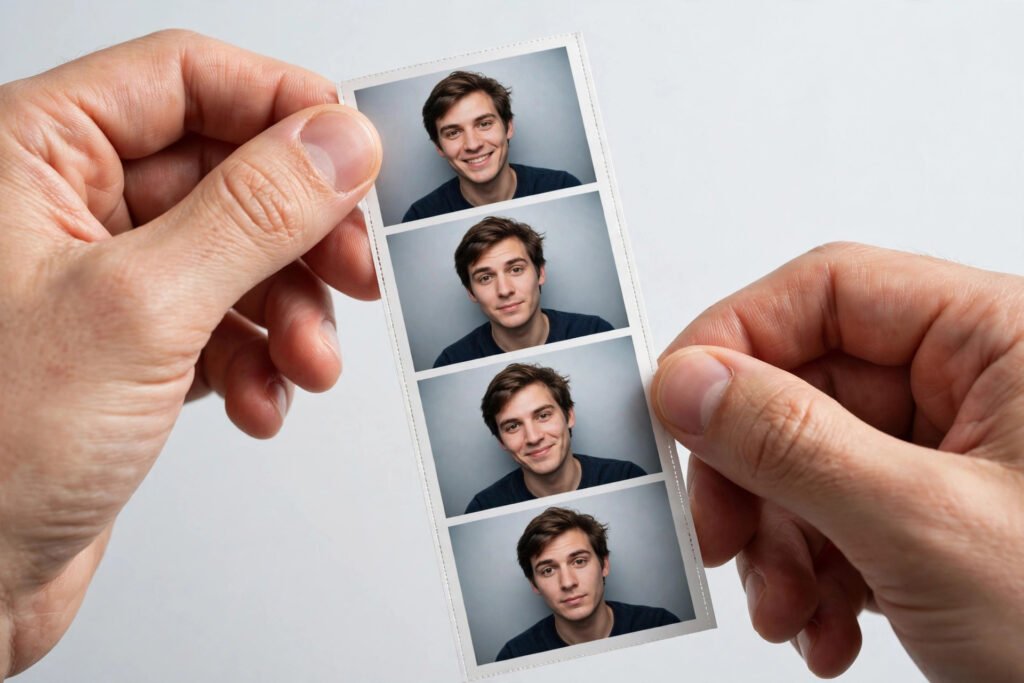
- Get it printed at a photo booth or studio — home-printed photos are usually not sharp enough and get rejected.
- Do not trim the photo to size yourself; booths print it at the correct 35 × 45mm.
- Print on proper photographic paper, with no borders.
- The photo must be undamaged — no creases, tears, marks or staples through your face.
- Only one colour photo is needed with a postal driving licence application.
Can You Use a Selfie for Your Driving Licence Photo?
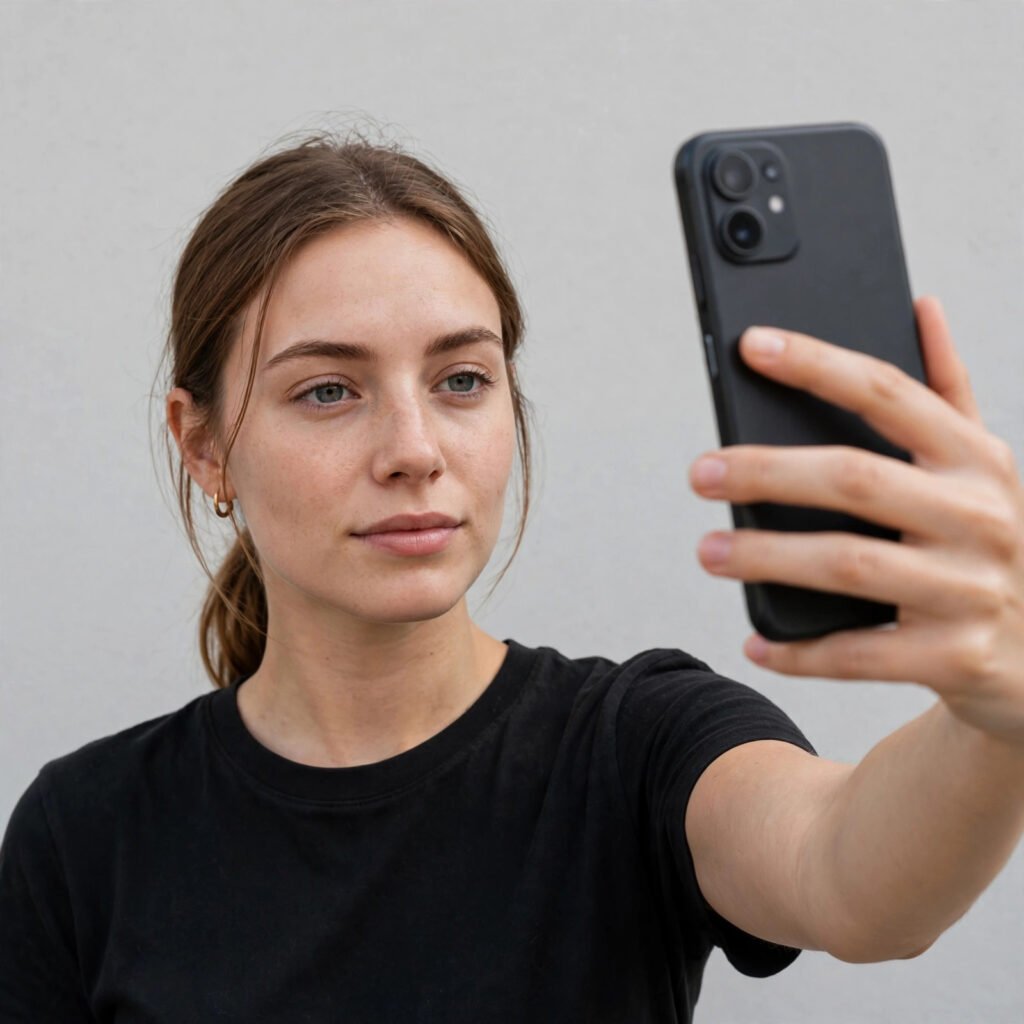
Yes — as long as it meets every rule above. There is no rule against taking the photo yourself. For a digital upload:
- Stand against a plain light-coloured wall with even daylight on your face.
- Hold the phone at eye level, not below your chin.
- Keep a neutral expression — no smiling, no filters, no beauty mode.
- Check the framing: head, shoulders and upper body, with space around your head.
In practice, asking a friend to take it gives a sharper, better-framed result — and a sharper photo means a lower chance of rejection.
Who Needs to Countersign Your Photo?
A countersignature is only needed for printed photos sent by post — never for digital uploads. And even then, only if you are proving your identity with documents other than an up-to-date UK or EEA passport, an eVisa, or a UK travel document.
If a countersignature is required:
- An authorised person must sign the back of your photo.
- They must live in the UK and not be a relative of yours.
- Suitable people include a teacher, solicitor, or another professional person who knows you.
Applying online with a valid UK passport? You skip this entirely — DVLA verifies your identity digitally.
Do You Need a New Photo to Renew Your Licence?
Yes. Your photocard — and the photo on it — must be renewed every 10 years. When you renew:
- Online (£14): you can reuse your UK passport photo, or upload a new digital photo.
- By post: send a new printed photo with your application.
You do not need a new photo for a change of name or address, or for a replacement for a lost or stolen licence — unless your appearance has changed significantly, in which case renew with a new photo. If you are applying for your first licence, see our guide to the provisional driving licence, which also needs a photo meeting these same rules.
Why Driving Licence Photos Get Rejected
These are the most common reasons DVLA sends applications back:
- Wrong size — home-trimmed or incorrectly scaled prints.
- Shadows — on your face or on the background behind you.
- Smiling or frowning — any expression other than neutral.
- Sunglasses or tinted glasses — or glare on ordinary glasses.
- Filters or editing — beauty filters, skin smoothing, or red-eye “fixes” all count as alterations.
- Busy background — patterns, objects, or other people visible.
- Old photo — taken more than a month ago, or no longer a true likeness.
- Poor print quality — home printers rarely meet the standard; use a booth or studio.
- Head too small or too large — outside the 29–34mm range.
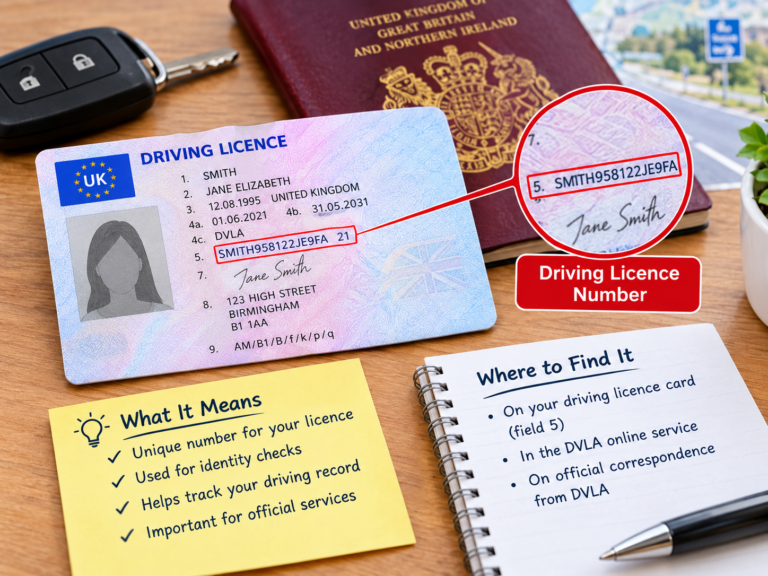
A rejection does not cost you extra, but it delays your licence by weeks — getting the photo right first time is the fastest option. Your photo sits on the front of your photocard next to your driving licence number, so it is worth the extra care. For anything else about the issuing agency itself, see our DVLA driving licence guide.
FAQs: Driving Licence Photo Requirements
Conclusion
- Your photo must be 35 × 45mm, colour, taken within the last month, on a plain light background.
- Head 29–34mm, neutral expression, eyes open and fully visible.
- Digital: JPEG, at least 600 × 750 pixels, under 10MB — a careful selfie is acceptable.
- Printed: booth or studio print, never home-printed, never trimmed by hand.
- Countersignature only for postal applications without a UK/EEA passport — signed by a UK resident who is not a relative.
- New photo needed for provisional, renewal (every 10 years), and exchange applications — not for name/address changes or duplicates.
All rules, sizes and procedures in this article were verified against GOV.UK and official DVLA guidance in October 2026.
4 Comments