Driving Licence Number: Where to Find It and What It Means
Last reviewed: September 2026. Details are taken from GOV.UK and the official DVLA licence format.
Your driving licence number is not random. It is a 16-character code built from your surname, date of birth and initials, sitting in field 5 on the front of your photocard. Once you know the pattern, you can read most of it yourself.
This guide shows exactly where to find your driving licence number, how to decode it, and what to do if you cannot find your card at all. Every detail was checked against GOV.UK and DVLA’s official licence format in September 2026.
Where Is Your Driving Licence Number?
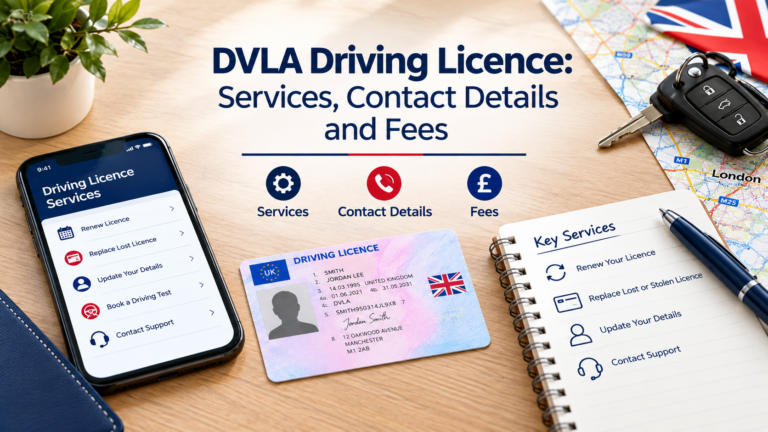
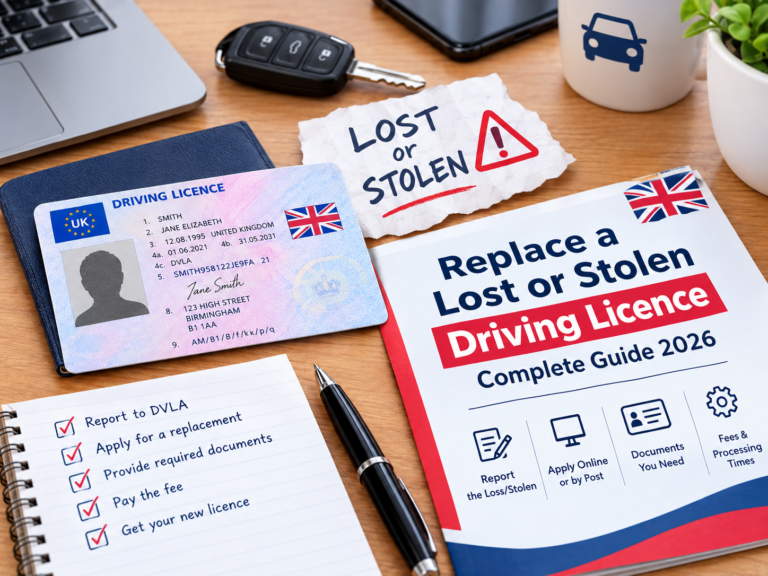
Your driving licence number is on the front of your photocard, in field 5, underneath your name, date of birth, and the licence issue and expiry dates.
It looks like this, for example: MORGA657054SM9IJ 35
The 16-character code is your driver number. The short 2-digit number next to it is a separate licence issue number, which goes up each time DVLA issues you a new licence.
What does the driving licence number look like on a paper licence?
Old paper licences, issued before photocards began in 1998, use a different, shorter format and do not follow this pattern. If you still hold one, you will need to exchange it for a photocard eventually, since paper-only licences are not valid after age 70 or after you change your address.
What Does a Driving Licence Number Mean?
A GB driving licence number is built entirely from your personal details, so DVLA does not need to store a separate random ID for every driver. Reading left to right, the 16 characters break down as:
| Position | What it represents |
|---|---|
| 1–5 | First 5 letters of your surname (padded with 9s if your surname is shorter) |
| 6 | Decade digit of your birth year |
| 7–8 | Birth month (women’s first digit has 5 added) |
| 9–10 | Birth day |
| 11 | Year digit of your birth year |
| 12–13 | Initials of your first and middle name (a 9 replaces a missing middle initial) |
| 14 | Usually 9, a filler digit |
| 15–16 | Computer-generated check characters, used to catch input errors |
How do you read the birth date part?
Characters 6 to 11 encode your birth date. For a man born on 23 March 1986, this reads as 803236: the 8 and 6 come from the decade (198_6_) and year digit, 03 is the month, and 23 is the day.
For a woman with the same birthday, DVLA adds 5 to the first digit of the month. So 23 March 1986 becomes 853236 instead of 803236. This is the one part of the code that differs by gender marker on the licence.
Why does the code contain your birth date?
It is a legacy of how DVLA originally generated licence numbers before digital records were standard. Because it encodes real personal data, avoid posting a photo of your full licence, or your licence number, publicly online or on social media.
Driving Licence Number vs Other Numbers on Your Card
Your photocard shows more than one number, and they are easy to confuse:
- Driving licence number (field 5): the 16-character code covered above. This is what insurers, employers and car hire firms usually mean by “licence number”.
- Licence issue number: a short 2-digit number next to your driver number. It increases each time DVLA reissues your licence, for example after a renewal or a replacement.
- Document number (on the back): a separate barcode-linked number used for security and printing purposes.
If a form asks for your “driving licence number”, it almost always means the 16-character code in field 5, not the issue number.
How to Find Your Driving Licence Number Without Your Card
If you cannot find your physical licence, you can still recover your number.
Can you find it online?
Yes, using GOV.UK’s “View your driving licence information” service. You need:
- your National Insurance number
- your name
- your postcode
- your gender
- your date of birth
This confirms your licence details, including your number, without needing the card itself.
Can you find it on other documents?
Your driving licence number is often printed on:
- your car insurance certificate or schedule
- some car hire or rental agreements
- correspondence DVLA has previously sent you
Check these before contacting DVLA directly, since they can save you a phone call.
Can you call or write to DVLA?
Yes. You can call DVLA on 0300 790 6801, Monday to Friday 8am to 7pm and Saturday 8am to 2pm. Have your National Insurance number and date of birth ready.
For a full written record, you can send a subject access request to DVLA, Swansea, SA99 1BX, or email requests@dvla.gov.uk using the “make a subject access request” form on GOV.UK.
Northern Ireland Driver Numbers Are Different
If you hold a Northern Ireland licence, issued by the DVA rather than DVLA, your driver number works differently. It is a straightforward 8-digit number, with no encoded personal details, unlike the GB format above.
Changes made to the GB licence number format in 2015 did not affect Northern Ireland licences. NI licences also keep a paper counterpart alongside the photocard, which GB licences dropped that same year. If you have an NI licence, use nidirect’s “View or share your Northern Ireland driving licence information” service, not the GOV.UK one, to check your details or generate a check code.
Is Your Driving Licence Number the Same as Your Insurance Reference?
No. Your car insurer will ask for your driving licence number to verify your identity and record, but they generate a separate policy or customer reference number of their own. If a form only says “licence number” without saying whose, it almost always means the 16-character DVLA code, not an insurance reference.
Many people also assume the barcode on the back of their photocard encodes the same information as field 5. It does not. The barcode is used by scanning equipment, such as at some car hire counters, and is a separate security feature rather than a human-readable version of your driver number.
Driving Licence Number and Check Codes
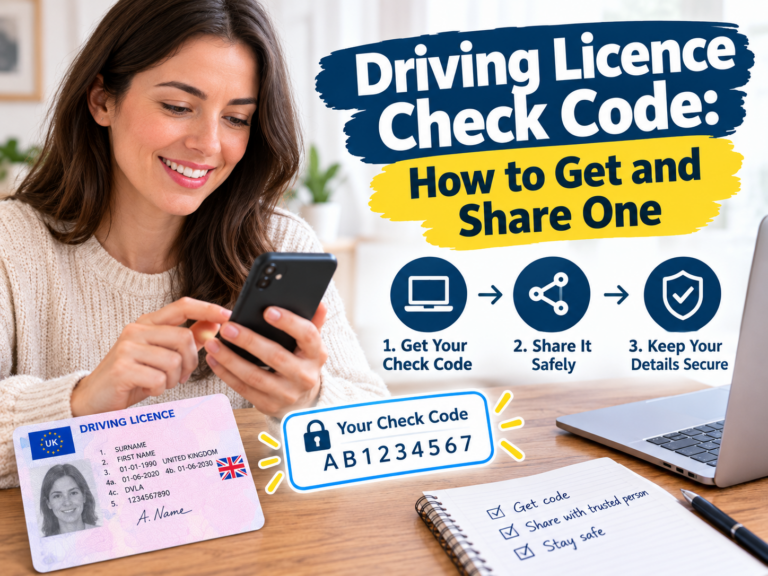
Your driving licence number is also part of how you share your driving record. A licence check code, generated through GOV.UK, lets an employer or car hire company view your entitlements and penalty points. To use it, they need both the check code and the last 8 characters of your driving licence number.
The code is valid for 21 days and can only be used once. This system replaced the old paper counterpart, which stopped being valid in June 2015.
Driver Number vs Licence Codes: Two Different Things
It is easy to confuse your driving licence number with the “codes” that appear on your licence, since both are made of numbers. They are not related.
- Driving licence number (field 5): the fixed 16-character identifier covered throughout this guide.
- Licence codes (field 12, on the back): separate numeric codes that show conditions or restrictions on your entitlement, such as 01 for eyesight correction, 10 for modified transmission, 78 for automatic transmission only, or 96 for towing a heavier trailer.
Your driver number never changes based on your codes. Codes can be added or removed over time, for example if your eyesight correction requirement is confirmed at an eye test, but your 16-character licence number stays the same throughout.
Why do the last two characters exist?
Characters 15 and 16 of a GB driving licence number are computer-generated check characters. DVLA’s system uses them to catch typing errors, such as a transposed digit, when your number is entered into a form or database. They are not derived from your personal details in the same way as the rest of the code, so you cannot work them out by hand, only DVLA’s system can generate them correctly when your licence is first issued.
Does Your Driving Licence Number Ever Change?
For most drivers, no. Your 16-character driving licence number is designed to stay with you for life, across renewals, address changes, and photo updates. Only the separate licence issue number increases each time DVLA reissues your card.
There are two situations where your driving licence number does change:
- Changing your name: since characters 1 to 5 and 12 to 13 are built from your surname and initials, a legal name change means DVLA issues you a new number to match.
- Updating your gender marker: since the month digits in characters 7 to 8 depend on your gender marker, updating this on your licence also changes your number.
In both cases, DVLA cancels your old number and issues a new one, so old documents, insurance records or employer files referencing your previous number will need updating.
Why Does DVLA Use This Format at All?
Building the driving licence number from personal details, rather than assigning a random sequence, serves a practical purpose. It lets DVLA’s systems, and third parties such as insurers, cross-check that a licence number is internally consistent with the name and date of birth someone has provided, without needing to query a database first. A number that does not match the stated surname or birth date pattern is an immediate signal to check further.
This also explains why two people with identical names and birthdays would otherwise generate the same base code. In practice, this is rare enough that DVLA’s system handles it through the check characters and issue tracking, but it is one reason the number is not treated as a secret in the way a password would be, only as something to share carefully.
Where Else Is Your Driving Licence Number Used?
Beyond identifying your licence itself, your driving licence number turns up across several everyday processes:
- Car insurance: insurers ask for it to verify your identity and check your driving record before quoting or renewing a policy.
- Car hire and rental: hire companies use it, often alongside a check code, to confirm your entitlement before handing over keys.
- Job applications: employers who need staff to drive, such as delivery or van driving roles, may ask for it to run a licence check as part of vetting.
- Right to drive checks for fleets: companies running vehicle fleets use it to periodically re-verify that employees still hold a valid licence.
- Proof of identity or age: since the UK has no national ID card, your photocard, and by extension its licence number, is widely accepted as identification, including for age verification.
None of these should require you to hand over your full physical licence permanently. A check code, generated for the specific purpose, is usually enough, and keeps your birth date and other details away from anyone who does not strictly need them.
What If Your Driving Licence Number Looks Wrong?
Can there be an error in your driving licence number?
Genuine printing errors are rare, since DVLA generates the number automatically from the details you provide when you apply. Most “wrong number” cases are really one of these:
- A data entry mistake at application: if your name or date of birth was recorded incorrectly, the number generated from it will not match reality. Contact DVLA to correct your personal details, and a corrected licence will follow.
- Confusing the driving licence number with another field: as covered above, the document number on the back, or the licence issue number, are not the same as your driving licence number.
- An old licence with the pre-2015 physical format: the character layout on the card changed slightly for GB licences in 2015, though the underlying 16-character logic stayed the same.
If you genuinely believe your driving licence number does not match the pattern for your details, check the gender-based month adjustment first, since that is the most common source of confusion, before contacting DVLA.
Sorting Out a Wrong or Missing Number
- Cannot read the number on a worn or damaged card: use the online “View your driving licence information” service instead of trying to decode a faded photocard.
- Number does not match the birth date pattern: double-check the gender marker rule for the month digits before assuming there is an error, since a mismatch here is expected for female drivers.
- Given a document number instead of a driving licence number: check field 5 specifically, not the barcode number on the back of the card.
- Licence lost, and the number is needed urgently: call DVLA directly rather than waiting for a replacement card to arrive.
Conclusion
Your driving licence number is a fixed, 16-character code in field 5 of your photocard, built from your surname, birth date and initials. If you cannot find your card, GOV.UK’s online service, your insurance documents, or a call to DVLA can all recover it without waiting for a replacement.
Next, if your card itself is missing, check how to replace a lost or stolen driving licence.