Can I Drive While Pregnant? (UK Rules & Safety)
Can I drive while pregnant in the UK? Yes — as long as you feel well and safe to drive. Pregnancy itself is not a driving ban, and there is no set week by which you must stop. That said, driving while pregnant comes with rules worth knowing: your seatbelt still has to be worn (positioned the right way), a few medical situations do need telling the DVLA, and there are days — labour day above all — when you should not drive at all. This guide covers the law, the seatbelt, the DVLA, and how to stay comfortable behind the wheel. This is general information, not medical advice — always follow your midwife’s or doctor’s advice.
Can I Drive While Pregnant in the UK?
Yes. The short answer is the whole answer for most pregnancies: if you feel well, you can keep driving. There is no law that stops you driving at a certain week, and pregnancy on its own is not something you have to report to the DVLA. What changes things is how you feel and what your care team says. If you feel dizzy, faint, very tired, or severely nauseous, do not drive — pull over safely if it comes on mid-journey. If your doctor or midwife tells you not to drive, follow that. And never drive yourself to hospital in labour: call your midwife, your birth partner, or an ambulance instead. The same ‘can I drive with this?’ question comes up with injuries too — our guide to driving with a medical issue covers how medical fitness affects driving in general.
Do I Have to Wear a Seatbelt While Pregnant?
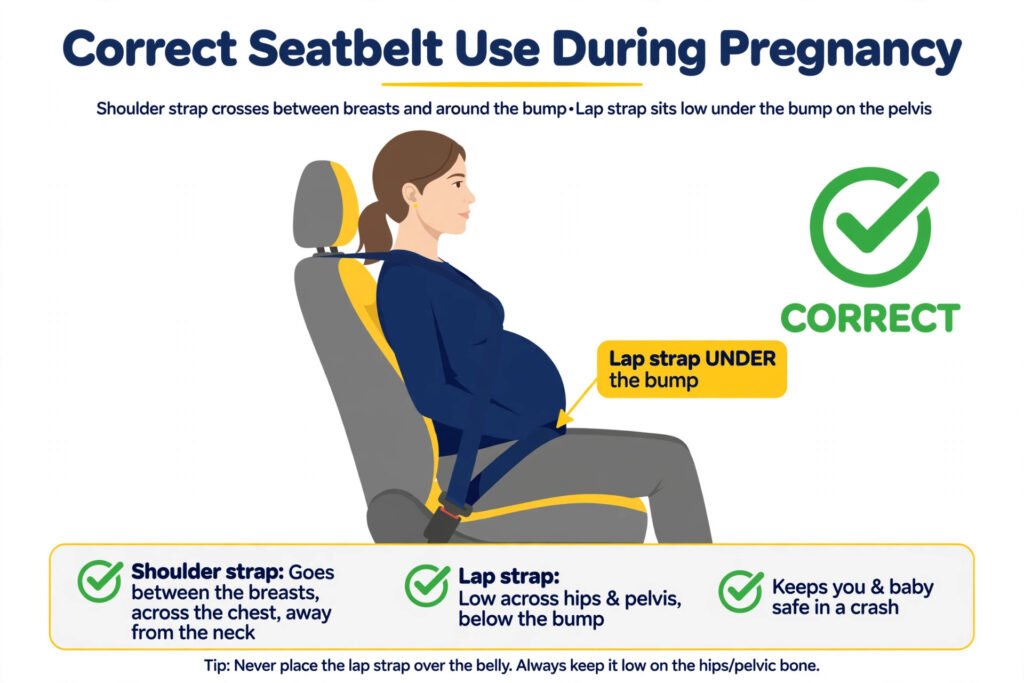
Yes — you must wear a seatbelt while pregnant, unless your doctor says you do not have to for medical reasons. And that exception is narrower than most people think. There is no automatic exemption for pregnancy. Your doctor must judge your individual case and issue a formal Certificate of Exemption from Compulsory Seat Belt Wearing for a stated period. A doctor’s letter alone is not a valid substitute. If you do hold a certificate, keep it in the vehicle, show it to police if you are stopped, and tell your insurer. The fine for not wearing a seatbelt when one is required is up to £500. Position matters as much as wearing it: the lap strap goes across your pelvis and hips, UNDER the bump — never across the bump itself. The diagonal strap goes between your breasts and around the bump. Worn this way, the belt protects both you and your baby; worn across the bump, it can do harm in a crash.
Do I Need to Tell the DVLA I’m Pregnant?
No — pregnancy itself is not a DVLA-notifiable condition. You do not need to tell the DVLA just because you are pregnant, and there is no pre-eclampsia DVLA rule or week cut-off to worry about. What CAN trigger the DVLA rules is a condition or treatment connected to the pregnancy. The main one is gestational diabetes: tell the DVLA if insulin treatment lasts (or will last) over 3 months, including over 3 months after the birth, or if you get disabling hypoglycaemia (low blood glucose), or if a medical professional says you are at risk. If your diabetes is managed by diet alone, you do not need to tell the DVLA. The general rule behind all of this: you must tell the DVLA about any medical condition that affects your driving, and the fine for not doing so is up to £1,000. If you are unsure whether your situation counts, ask your doctor or midwife — and keep your details current: our guide to keeping DVLA details up to date explains how. You can also check what your licence currently shows in our guide to your DVLA licence record.
When Should I Stop Driving While Pregnant?
There is no legal cut-off, so the answer is about your body, not the calendar. Stop driving — or at least pause and get advice — if you feel dizzy, faint, severely nauseous, or so tired you cannot concentrate. Many people naturally stop in the last weeks because the bump makes reaching the pedals uncomfortable and turning to check blind spots hard. That is a good instinct to follow. Your doctor or midwife may also advise you to stop for a specific reason — follow that advice. And the one absolute: never drive yourself to hospital in labour. Contractions, pain, and the rush to get there are a dangerous combination. Arrange your lift in advance so the decision is already made.
Driving Comfortably While Pregnant
Small adjustments make a real difference. Move your seat back as far as you comfortably can while still reaching the pedals and controls — this gives the bump room and keeps you the right distance from the steering wheel. Keep the airbag ON: airbags are designed to work with seatbelts, not instead of them, and switching one off does not make you safer. Wear the belt exactly as described above. If your back aches, a small cushion for lumbar support helps, and loose clothing beats anything tight around your middle. If a journey leaves you stiff or sore, that is your body telling you to shorten trips and take more breaks.
Long Car Journeys While Pregnant
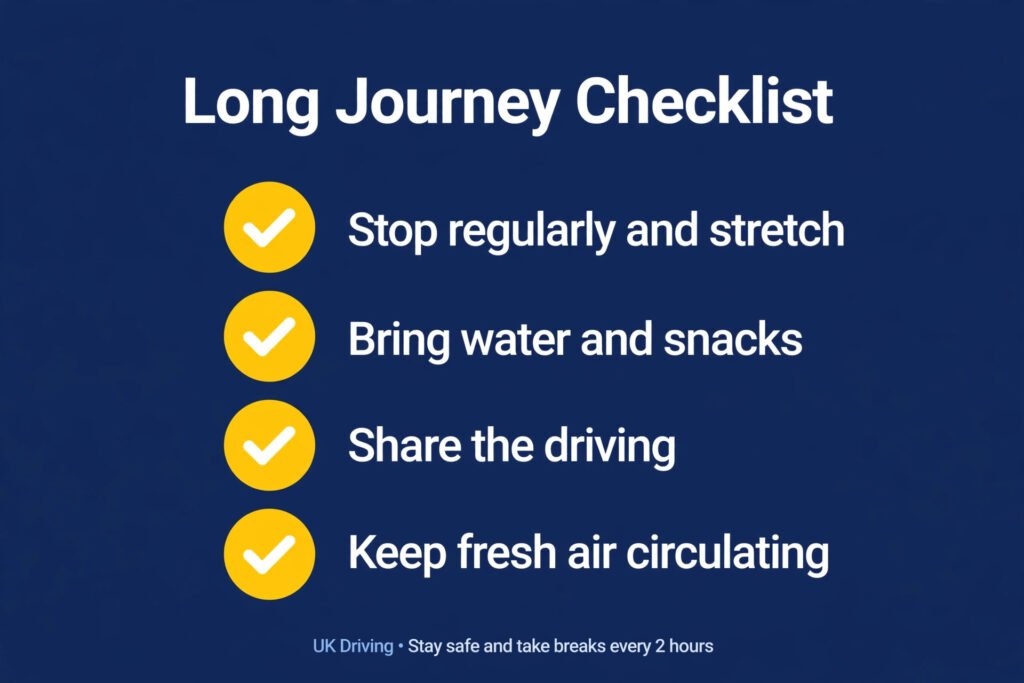
Long journeys are best avoided while pregnant, but if one is unavoidable, plan it properly. Stop regularly, get out, and stretch and move around — this helps circulation and eases stiffness, and it matters more on trips over about four hours. Bring water and snacks, and eat and drink regularly: tiredness and dizziness are common in pregnancy, and an empty stomach makes both worse. Keep fresh air circulating in the car. Do not travel alone on a long trip if you can avoid it, and share the driving where possible. Road accidents are among the most common causes of injury in pregnant women, so the safest long journey is the one you postpone, shorten, or share.
What If I’m in a Crash While Pregnant?
After any crash, however minor, contact your midwife or doctor promptly and get checked — even if you feel fine and the bump was barely touched. Do not downplay a minor bump. Your care team will want to check you and the baby, and they may want to see you the same day. Tell your insurer about the crash as normal. And keep any medical exemption certificate in the vehicle if you hold one — it is part of your driving paperwork.
Official source: GOV.UK seat belt law.
Pregnancy Driving Checklist
- Wear your seatbelt on every journey, unless you hold a formal medical exemption certificate.
- Put the lap strap across your pelvis and hips, under your bump — never across the bump itself.
- Thread the diagonal strap between your breasts and around the side of your bump.
- Do not drive if you feel dizzy, faint, severely nauseous, in severe pain, or too tired to concentrate.
- Never drive yourself to hospital in labour — call your midwife, birth partner or an ambulance.
- Tell DVLA only if a connected notifiable condition or treatment applies, such as insulin-treated gestational diabetes lasting over 3 months or disabling hypoglycaemia, and follow your doctor’s or midwife’s advice.
Conclusion
So, can you drive while pregnant in the UK? Yes — while you feel well and safe, with your seatbelt worn correctly (lap strap under the bump, diagonal between your breasts), airbag on, and your care team’s advice followed. You do not need to tell the DVLA about the pregnancy itself — only if a triggered rule applies, like insulin-treated gestational diabetes. Stop when your body says stop, never drive yourself to hospital in labour, and get checked after any crash, however small. Pregnancy changes a lot — your right to drive is not one of them.