Do I Need to Carry My Driving Licence in the UK? (2026)
So, do I need to carry my driving licence in the UK? The short answer is no. There is no law that requires you to have the physical photocard in your pocket or wallet every time you drive.
But there is an important catch. If a police officer stops you and asks to see your licence, you must be able to produce it. If you do not have it with you, you get 7 days to take it to a police station. Miss that deadline, and you commit an offence. Here is exactly how the rule works.
Do I Need to Carry My Driving Licence in the UK? The Law Explained
UK law draws a clear line between two different things:
- Holding a valid licence — you MUST hold a valid driving licence for the category of vehicle you are driving. Driving without one is a serious offence.
- Carrying the physical card — there is NO legal duty to carry it with you.
This comes from the Road Traffic Act 1988. Section 164 gives a police officer the power to require you to produce your driving licence when you are driving. But sections 164(7) and 164(8) give you a defence: if you produce it in person at a police station within 7 days, you have committed no offence.
In plain English: the card can stay at home. The entitlement cannot.
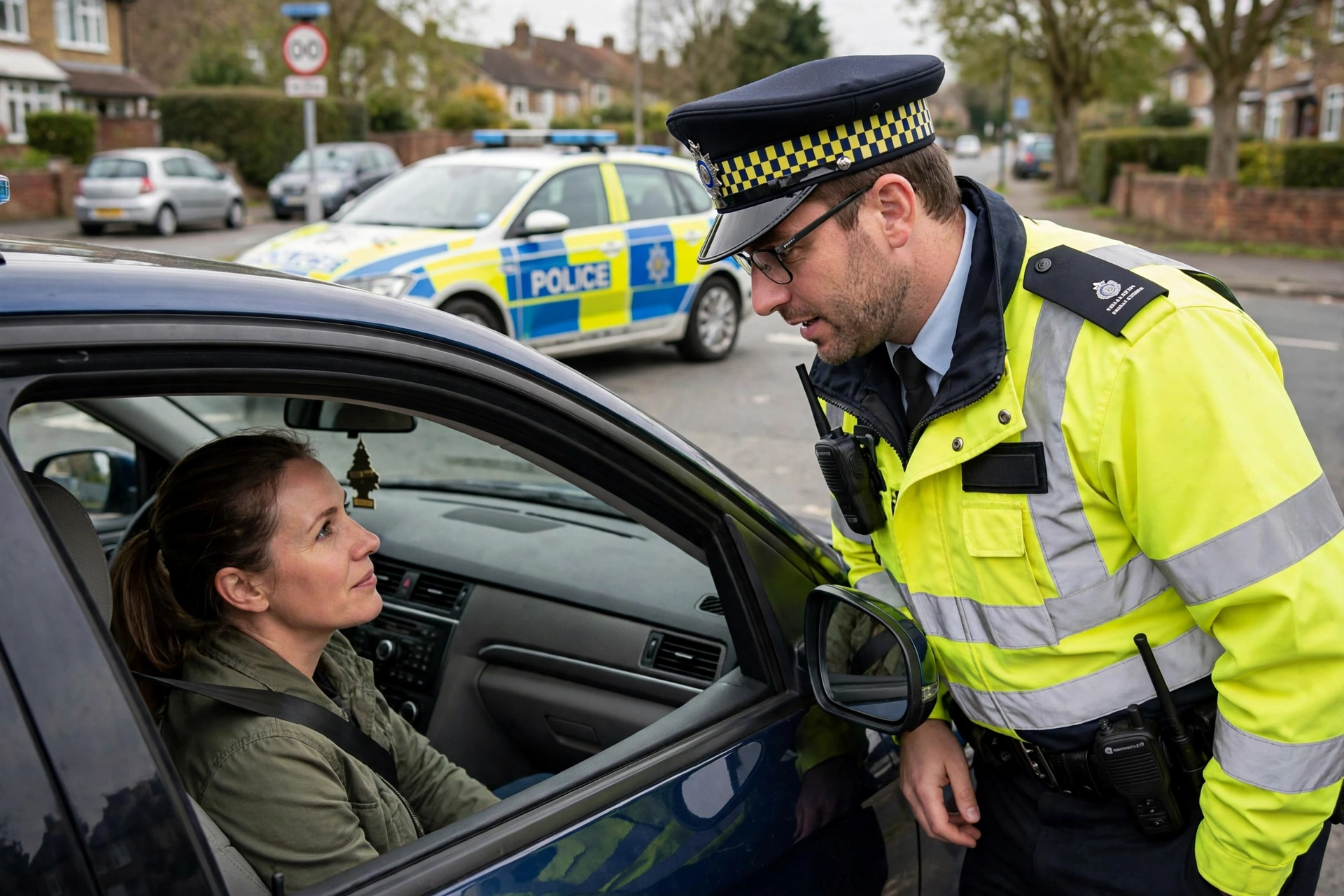
What Happens If the Police Stop You and You Do Not Have Your Licence
Stay calm — this happens all the time, and the process is routine:
- The officer will ask you to produce your driving licence (and usually your insurance certificate too).
- If you do not have them, the officer will issue a “producer” — officially Form HO/RT1.
- You must then take your documents in person to a police station within 7 days.
- Important: you name the police station at the time you are stopped. You cannot choose a different one later.
You will also be asked to give your name, address and date of birth (section 165 of the same Act). In practice, officers can often check your details electronically against DVLA records at the roadside — for example using your driving licence number and personal details — but that does not remove the legal duty to produce the documents when formally required.
The Other Documents the Police Can Ask For
It is not only your licence. Under sections 164 and 165 of the Road Traffic Act 1988, and the Highway Code’s annex on motor vehicle documentation, you MUST be able to produce the following when requested by a police officer:
- Your driving licence
- A valid insurance certificate
- A valid MOT certificate (if the vehicle needs one)
The same 7-day rule applies: if you cannot produce them on the spot, you may be asked to take them to a police station within seven days.
What If You Miss the 7-Day Deadline?
Then the legal protection disappears. Failing to produce your licence within 7 days, without a reasonable excuse, is an offence under the Road Traffic Act 1988, and you can be prosecuted — a court will normally impose a fine.
Practical tips to stay safe:
- Go to the station as early as you can. Do not wait until day 7.
- Keep the HO/RT1 form safe — it tells you exactly what to bring and where.
- If something genuinely stops you getting there in time, the law allows a defence where it was not “reasonably practicable” — but do not rely on this.
Note the difference: this is about paperwork. More serious offences, like driving with no valid licence at all, are punished more harshly and can put penalty points on your licence.
Should You Carry Your Driving Licence Anyway?
Legally you do not have to — but there are good practical reasons to keep it with you.
Reasons to carry it:
- A roadside check ends in seconds instead of a trip to a police station.
- It is a widely accepted photo ID — useful for age checks, banks and hiring cars.
- If your details are out of date (wrong address, expired photocard), you can be fined up to £1,000 — seeing the card reminds you to check it.
Reasons some drivers leave it at home:
- If it is lost or stolen, you will need to replace a lost driving licence, which costs £20 and takes time.
- Some people simply prefer not to carry ID — which is entirely their right in the UK.
One more thing to watch: the government has been trialling an optional digital driving licence inside the GOV.UK Wallet app. It is voluntary, and the physical photocard remains valid — but one day your phone may be enough.

Do I Need to Carry My Driving Licence When Driving Abroad?
Yes — treat other countries completely differently. Many countries legally require you to carry your driving licence while driving, and some also require an International Driving Permit alongside your UK licence. Police abroad will not give you 7 days; you could face an on-the-spot fine.
The rule of thumb is simple: optional at home, essential abroad. Always take your photocard — and an IDP where needed — when driving outside the UK.
Conclusion
Do I need to carry my driving licence in the UK? No — the law does not require it. What the law does require is that you hold a valid licence and can produce it when the police ask: on the spot if you have it, or at a police station of your choice within 7 days if you do not.
Carrying it anyway saves hassle and doubles as handy photo ID — just keep your details up to date, and always pack it when driving abroad.
4 Comments