Provisional Driving Licence: How to Apply, Cost and Documents
Last reviewed: September 2026. Fees and rules are taken from GOV.UK.
A provisional driving licence costs £34 online, and most applications arrive within a week. Get one document wrong, though, and DVLA can bounce your application back, costing you both time and your test date planning.
This guide covers who can apply, what you need, the exact steps, and how to track or fix a delayed application. Every fee and rule was checked against GOV.UK in September 2026.
Who Can Apply for a Provisional Driving Licence?
To apply for your first provisional driving licence, you must:
- be at least 15 years and 9 months old
- be able to read a number plate from 20 metres away
- have permission to live in Great Britain (England, Scotland and Wales) for at least 185 days
This is a car, motorbike, moped or other vehicle licence issued by DVLA. If you live in Northern Ireland, you apply separately through the DVA on NIDirect.
Can you apply before you can legally drive?
Yes. You can apply for a provisional driving licence at 15 years and 9 months, but you cannot drive a car on public roads until you turn 17. The exception is 16, if you get the higher or enhanced rate mobility component of PIP or DLA. Applying early simply means your licence is ready and waiting once you reach driving age.
What are the eyesight and health requirements?
You must be able to read a number plate made after 1 September 2001 from 20 metres, with glasses or contact lenses if you normally wear them. You must also declare any medical condition that could affect your driving, such as epilepsy, diabetes treated with insulin, or a heart condition. Not declaring a notifiable condition can lead to a fine of up to £1,000.
What Documents Do You Need for a Provisional Licence?
What do you need to apply online?
- Your National Insurance number, if you know it
- Your addresses for the last 3 years
- A form of ID, usually a valid UK passport
- A debit or credit card for the £34 fee
If you use a valid UK or non-UK passport, DVLA can usually verify your identity electronically, using your passport number and photo. This means you do not need to post any documents.
What can you use if you do not have a passport?
- A biometric residence permit (BRP) or biometric residence card (BRC)
- A UK Visas and Immigration (UKVI) share code, if you have used the “UK Immigration: ID Check” or “EU Exit: ID Document Check” service before
- A UK birth, adoption or naturalisation certificate
- A current and valid Irish passport
- A passport from outside the EU or EEA, with a valid visa sticker or stamp
- A travel document
- Evidence that you receive a State Pension
- A national identity card, in some cases
If DVLA cannot verify your identity electronically, or you apply by post, you may need to send original identity documents and get your photo countersigned.
Why do you need proof of identity at all?
DVLA uses your ID to confirm you are who you say you are, and to generate the photo and signature that go on your licence. This is also a fraud check, since a driving licence doubles as one of the most widely accepted forms of photo ID in the UK.
Who can countersign your photo?
If you are not using a passport or a UKVI share code to prove your identity, someone else must sign the back of your photo to confirm it is a true likeness of you. This person:
- must not be a relative
- must hold a recognised professional qualification, or a role such as local councillor or Civil Servant
- must know you personally
- must not live at the same address as you
What proves your address, if asked?
If you are not using ID that already shows your address, or DVLA asks for further proof, you can use:
- a utility bill
- a bank or credit card statement
- a doctor or hospital appointment letter
How to Apply for a Provisional Driving Licence
How do you apply online?
- Go to the GOV.UK page “Apply for your first provisional driving licence” and select “Sign in to apply”.
- Create sign-in details, or use existing ones.
- Prove your identity if asked, usually with your passport.
- Enter your personal details, address history and any medical conditions.
- Pay the £34 fee by debit or credit card.
- Check your confirmation email once you have applied.
How do you apply by post?
- Get a D1 “application for a driving licence” form from most Post Office branches, or order one from DVLA.
- Fill in your personal details, address history, eyesight declaration and medical conditions.
- Attach a passport-style colour photo, countersigned if needed.
- Send the form with your original identity documents and a cheque or postal order for £43, payable to DVLA.
Postal applications generally take longer than online ones, since DVLA has to check and return your original documents.
Provisional Licence Fees
| Method | Fee | Payment |
|---|---|---|
| Online | £34 | Debit or credit card |
| Post | £43 | Cheque or postal order |
Cash is not accepted for postal applications. Always apply through GOV.UK directly, since some unofficial sites charge extra “service fees” for the same process.
How Long Does a Provisional Licence Take?
Online applications usually arrive within 1 week. It can take longer if DVLA needs to carry out extra identity or medical checks. You will get a confirmation email as soon as you apply, which is not the same as the licence arriving.
Postal applications typically take longer, often several weeks, since they involve physically checking and returning your documents.
How do you track your application?
Use the “Track your driving licence application” service on GOV.UK. For a first provisional licence, you need:
- your application reference number, which starts with “FP” followed by 10 letters (for example, FPAB-ABCD-ABCD), sent to you by email after you applied
- your addresses for the last 3 years
- your National Insurance number
- your UK passport number, if you used one
If your reference number does not start with “FP”, you applied for a different service, such as renewing a 10-year photocard, and need a different tracking page.
What if your provisional licence has not arrived?
- Check your reference number format and use the correct tracking service.
- Allow the full 1-week window before contacting DVLA, since this is the normal processing time, not a guarantee.
- Contact DVLA directly if it is significantly overdue, or if the tracker shows a problem with your identity documents.
What Happens After You Get Your Provisional Licence?
Your provisional licence lets you:
- start lessons with a driving instructor
- practise with a supervisor who is 21 or over and has held a full licence for the vehicle type for at least 3 years
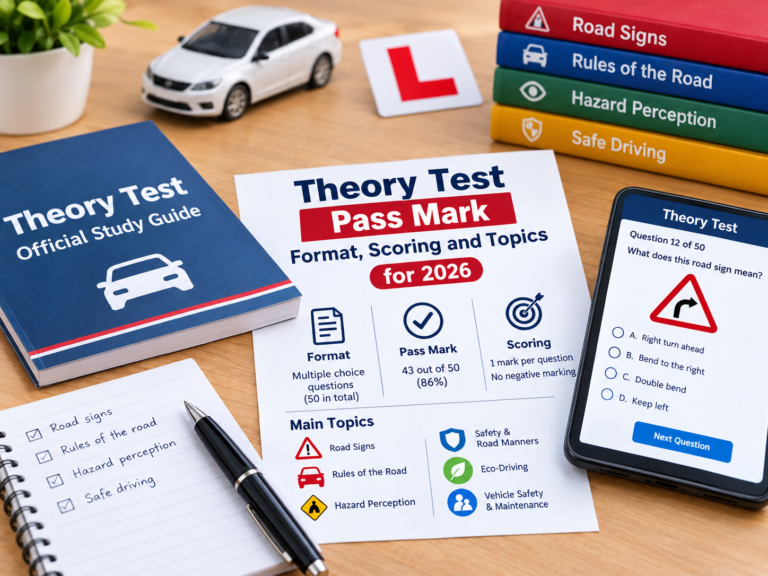
- book your theory test, once you are ready
You must display L plates (D plates in Wales) on the front and back of the car whenever you are driving. You cannot use motorways, except with an approved driving instructor in a dual-control car.
Where is your licence number, and what does it mean?
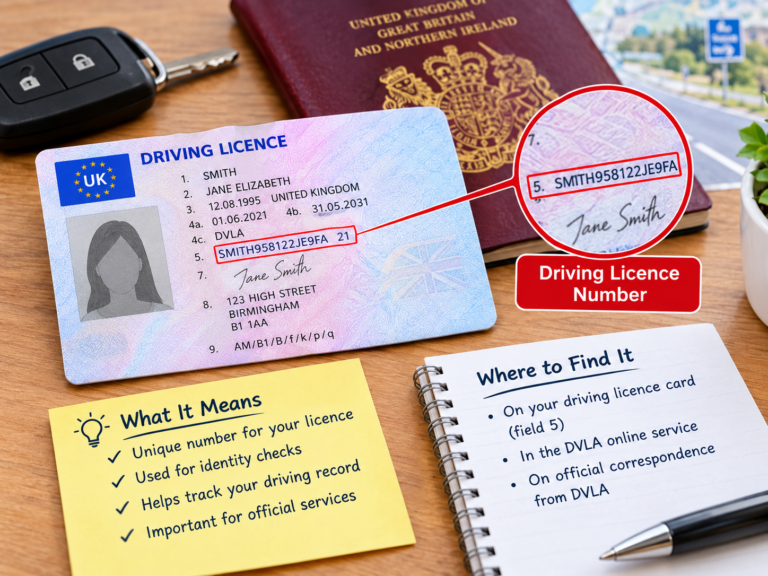
Your provisional driving licence number appears on the front of the card, under your expiry date. It is a 16-character code built from parts of your surname, date of birth and initials. In most cases, this same number carries over to your full licence once you pass, unless you later change your name or gender marker.
Does a Provisional Driving Licence Expire?
Your provisional licence follows the same 10-year photocard cycle as a full licence. The photo and licence details need renewing every 10 years, and DVLA usually writes to you before it expires.
If you have not passed your test by the time your provisional licence needs renewing, you simply renew it in the same way as a full licence, for £14 online or £17 by post, and continue learning on the new card.
What if you stop learning to drive for a long time?
There is no separate expiry just for being a learner. As long as your photocard itself has not expired, your provisional entitlement stays valid, even if you have not driven or taken lessons for years. You would only need to reapply from scratch if your original application was rejected, or if you let your photocard lapse without renewing it.
What If Your Provisional Licence Application Is Rejected?
Why might DVLA reject your application?
The most common reasons are:
- you did not provide acceptable proof of identity
- you do not meet the residency requirement
- you do not meet the health or eyesight requirement
- your application form is incomplete or the details do not match your documents
If your application is rejected before you make payment, you are not charged, and you can simply correct the issue and resubmit. DVLA will tell you why it was rejected.
Can you get a refund if you are rejected after paying?
Generally no, since the fee covers the processing of your application, not a guaranteed licence. This is another reason to double-check your documents and details before you submit, rather than after.
Can you appeal a rejected application?
Yes. If you believe your application was wrongly rejected, contact DVLA directly. You should normally get a response within about 2 weeks. If you are not satisfied with the answer, or do not hear back in that time, you can escalate the matter to DVLA’s Customer Complaint Resolution Team.
Driving Lessons and Practice on a Provisional Licence
Once your provisional licence arrives, you can start learning straight away, either with a qualified instructor or with a suitable supervisor.
Who can supervise you while learning?
Your supervisor must:
- be at least 21 years old
- have held a full licence for the vehicle type for at least 3 years
- not be paid to supervise you, unless they are an approved driving instructor
What insurance do you need to practise?
If you are practising in someone else’s car, you need cover under their policy or your own learner policy. If you are practising in your own car, you need a full car insurance policy that specifically allows learner drivers.
What are the L plate rules?
You must display L plates (D plates in Wales) on the front and back of the car whenever you are driving as a learner, even for a short trip. This applies whether you are with an instructor or a private supervisor.
Common Application Problems and Fixes
- Identity cannot be verified online: apply by post instead, with original documents and a countersigned photo.
- No passport and no one to countersign: check GOV.UK’s full list of acceptable ID and countersignatory roles before you apply, so you are not stuck partway through.
- Application delayed beyond a week: track it on GOV.UK first, since most delays are extra identity checks rather than a lost application.
- Wrong address history submitted: you can usually correct this by contacting DVLA once you have your reference number, rather than restarting the whole application.
- Applied before turning 15 years and 9 months: you cannot apply early. Wait until you meet the minimum age.
Conclusion
A provisional driving licence costs £34 online, or £43 by post, and usually arrives within a week if you apply online with a passport. Have your address history, ID and payment ready before you start, and track your application on GOV.UK if it takes longer than expected.
Next, once your provisional licence arrives, check the driving test booking rules and the theory test pass mark, so you know what comes after. And if you ever need to renew, replace, or update the licence you apply for here, the same GOV.UK account you create today makes those later steps quicker.
4 Comments